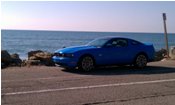


2011 Mustang GT 5.0L Going To The Track and Dyno!


Cobra Member

Joined: November 30, 2009
Posts: 1,121
Likes: 0
From: South
We actually hired/trained two more people that will be active on the forums for us along with Kent because I may be off doing R&D on new stuff!
Fred
Evolution Performance, Inc.
www.evoperform.com
Fred
Evolution Performance, Inc.
www.evoperform.com

Team Mustang Source
Joined: October 13, 2004
Posts: 2,842
Likes: 0
From: MD
We actually hired/trained two more people that will be active on the forums for us along with Kent because I may be off doing R&D on new stuff!
Fred
Evolution Performance, Inc.
www.evoperform.com
Fred
Evolution Performance, Inc.
www.evoperform.com

Thread Starter
Former Vendor
Joined: May 29, 2005
Posts: 196
Likes: 0

We actually hired/trained two more people that will be active on the forums for us along with Kent because I may be off doing R&D on new stuff!
Fred
Evolution Performance, Inc.
www.evoperform.com
Fred
Evolution Performance, Inc.
www.evoperform.com
Great for us to hear at least




Team Mustang Source
Joined: January 30, 2004
Posts: 2,298
Likes: 4
From: Tampa FL


Tasca Super Boss 429 Member
Joined: November 14, 2007
Posts: 3,651
Likes: 8
From: Pacific NW USA
While true, you can at least get a good feel for crank HP from a dyno. Our modern Mustangs lose about 12% hp from crank to the wheels with a manual trans and about 15% with an auto.
A better performance indicator is trap speeds from the 1/4 mile timeslips. That is based on pure physics (a known weight moved over a known distance at a known terminal velocity).
A better performance indicator is trap speeds from the 1/4 mile timeslips. That is based on pure physics (a known weight moved over a known distance at a known terminal velocity).
V6 Member
Joined: February 13, 2005
Posts: 58
Likes: 0
From: Harrodsburg, KY

Thread Starter
Former Vendor
Joined: May 29, 2005
Posts: 196
Likes: 0
I don't know how many of you are on Facebook, but I suggest being a fan of our Page. I will be updating it with all 2011 Mustang GT 5.0L 4V related stuff along with Photos and Videos! It really is the best place to check for our on going updates!
http://www.facebook.com/pages/Evolution-Performance-Inc/262882950647
http://www.facebook.com/pages/Evolution-Performance-Inc/262882950647
Cobra Member
Joined: November 30, 2009
Posts: 1,121
Likes: 0
From: South

Banned
Joined: August 16, 2006
Posts: 1,633
Likes: 0
Then you have to assume the dyno operator knows what they are doing ( rare ) and what correction factor was used.

Legacy TMS Member
Joined: January 6, 2006
Posts: 14,053
Likes: 166
From: Bay Area, CA


GT Member
Joined: April 29, 2010
Posts: 192
Likes: 0
From: Knoxville, TN
The only way to know for sure how much loss you will have from the flywheel to the rear wheels is to compare the same engine run on an engine dyno then a chassis dyno. Even that depends upon getting the engine dyno passes setup as close to what you would see on the chassis dyno as possible (mainly accessories and exhaust). Very few have actually done this (chassis dynos easy to do, plentiful, and cheap to use....engine dynos are none of the above).
The % formula's are a decent first guess, but shouldn't be taken as ground truth.
The % formula's are a decent first guess, but shouldn't be taken as ground truth.
Banned
Joined: August 16, 2006
Posts: 1,633
Likes: 0
The only way to know for sure how much loss you will have from the flywheel to the rear wheels is to compare the same engine run on an engine dyno then a chassis dyno. Even that depends upon getting the engine dyno passes setup as close to what you would see on the chassis dyno as possible (mainly accessories and exhaust). Very few have actually done this (chassis dynos easy to do, plentiful, and cheap to use....engine dynos are none of the above).
The % formula's are a decent first guess, but shouldn't be taken as ground truth.
The % formula's are a decent first guess, but shouldn't be taken as ground truth.
The whole "15%" thing is a bogus # based on what people GUESS from Dynojets. It is accurate to the tune of +/- 25 hp. If a 50 HP range is "close enough" for you then keep doing the 15% thing.
Cobra Member
Joined: November 30, 2009
Posts: 1,121
Likes: 0
From: South
From EP on facebook:
Evolution Performance, Inc. Our Stock 2011 Mustang GT 5.0L 4V weighs 3,824lbs with Driver and a Full Tank of Gas!
Here they are in the staging lanes...waiting...waiting..

Evolution Performance, Inc. Our Stock 2011 Mustang GT 5.0L 4V weighs 3,824lbs with Driver and a Full Tank of Gas!
Here they are in the staging lanes...waiting...waiting..
Last edited by todd03blown; Apr 30, 2010 at 06:06 PM.