


Brake Duct Kit Installation


Bullitt Member

Joined: July 4, 2011
Posts: 262
Likes: 0
From: Parker, Colorado
I didn't have to cut any of the liner, but I did not put that smaller liner (shown in an earlier photo) back up on the driver's side.
Currently not allowing me to upload photos (first said missing security token... now it just says 'Upload Failed').
Currently not allowing me to upload photos (first said missing security token... now it just says 'Upload Failed').

Bullitt Member
Joined: July 4, 2011
Posts: 262
Likes: 0
From: Parker, Colorado
Thanks for the reference pics 

Member
Joined: March 12, 2011
Posts: 24
Likes: 0
From: Indiana
My pre install additions
I purchased my kit prior to my car arriving, and I have yet to install it. I have read all of the comments with high interest, and learned a lot. I took my backer plates to a local machine shop and had them cut down to fit the hoses. He sliced the plate about 1" deep, then lightly "torqued" the flanges inward. After getting it to allow for the duct to slide onto it with some effort, I did not want it too loose, he plasma welded the seams. After he was done, I sandblasted them clean, and then had them powdercoated. It cost me a total of $ 46.00. Now I am ready to install them. I also called Ford Racing on Thursday, e-mailed a copy of my invoice, and received the predrilled fog lamp inserts on Friday.

Member
Joined: April 17, 2011
Posts: 25
Likes: 0
Cooling ducts
I don't know if this will help anyone but I did find a way to solve the hose connection to the backing plate with the cooling connection.That hole is 3"(as everyone is aware).I bought 2ft of 3 1/8" aircraft SCAT tubing.I cut in in half leaving 2 ,12" pieces.I then connected it to the backing plate cooler connection with a wide band screw type clamp,as well as the supplied screw type clamp.I verifyed that it was a strong connection.I then put the supplied 3" hose INSIDE the 3 1/8" hose and it fit nice.By using tie stips I secured the 3'' hose.It works very well since their is very much of the 3" stuffed into the 3 1/8" hose.The SCAT tubing is MAJOR stout and good to 550 degrees.Anyway I tried several ways and read a lot of other posts and thought I would try this.I hope it helps others.I bought the SCAT tubing at Aircraft Spruce.
txclyde1
LS 014
txclyde1
LS 014



Bullitt Member
Joined: July 4, 2011
Posts: 262
Likes: 0
From: Parker, Colorado
I didn't relocate the washer bottle, and probably could have gotten away without bending the horn up. Bending the horn just made it easier to route the tubing through the bumper. If I were picky, moving it would have been a better option. I'm more function over form 

Bullitt Member
Joined: October 21, 2004
Posts: 424
Likes: 0
From: Warsaw, IN
I think it's possible to not move the horn but I was worried about rubbing a hole in the hose. I tried to find a better position for the washer bottle but after screwing around with it for an hour, I said screw it and put it back to stock location.

Bullitt Member
Joined: December 29, 2010
Posts: 294
Likes: 1
From: NY
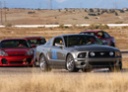
I've had my Boss on the road since the end of April and have never had to use the washer solvent. I ended up taking my washer solvent bottle off when installing the ducts. Made a nice straight shot back with the duct hose. I do drive the car quite a bit, but I tend to stay out of the rain if possible so maybe thats why I have never used the washers. I did see a picture of the LS ducting in Don Farrs Boss book. It shows the hose going beside the bottle like other guys here have stated. I just thought with the bends to get around the bottle that the cooling might not be as good as it being straight. I do know that the ducting works. Went to Nelson Ledges last Friday and the front brakes were cool compared to the back brakes. And the stock brakes worked good for me.
Cobra Member
Joined: August 5, 2008
Posts: 1,369
Likes: 0
From: Arvada, CO
I've always wondered about this as well -- how much effect it really has on this type of tube, which obviously wouldn't offer anything near laminar flow. I'd imagine some of it has to do with the pressure head built at the duct opening, but wonder if the rotor itself generates any negative pressure effect to pull cool air through to the center.

Bullitt Member
Joined: July 1, 2011
Posts: 279
Likes: 0
From: SD
Got my kit installed a few days ago.
I had air inlet plates (the 3" connector) from my GT brake cooling kit, so I simply swapped them between GT and Boss since I removed the Steeda cooking kit from the GT.
Big picture, here's what I did:
1. Remove inlet plates from front facia
2. Remove wheel, caliper, rotor backing plate
3. Remove front half of wheel liners--3 screws and about 5 pull tabs
4. Remove and discard drivers wheel well smaller black plastic piece that covers part of the brake line.


5. I moved the washer tank over. Remove 3 screws on washer tank. Add 1/4" washers to back side of 2 lower screws (I replaced front screw w/ 1/4" bolt). Use drill to elongate top hole so screw can go back in. Reattach tank. With the liner removed, its easy to get at. Here's upper and rear screws.

6. Remove horn, loosen nuts, turn horns up, tighten, then bend up bracket to get them away from hose.
7. Cut off triangle piece farthest from edge of car. I also put Gorilla duct tape on edges of the tin behind the horn as seen here, and same on other wheel well.

8. Passenger side facia - cut off right side of fog light holder w/ key hole saw. I also removed the remaining bottom finger seen in this pic. Moving washer tank and cutting this piece off made getting the hose thru there very easy.

9. Wrap electrical tape around facia hose connector for a better fit. Install hose clamps. Insert hose thru facia. Remove wire from other end of hose deep enough for the brake plate connector. Grab end of wire w/ wire cutter and pull. Reach in between hose layers and cut. Install and clamp.
10. Attach backing plate, and cable tie hose to sway bar. I bought 150 lb (huge) cable ties (recommended by Steeda rep on their kit).
11. Install wheel well liners and trim as desired for hose.
12. Install caliper and wheel, and check for tire/hose clearance. Adjust hose/cable ties as needed. I also added duct tape below the horn just in case it rubs.

Hope this, along with previous posts, helps the next person w/ their install.
I had air inlet plates (the 3" connector) from my GT brake cooling kit, so I simply swapped them between GT and Boss since I removed the Steeda cooking kit from the GT.
Big picture, here's what I did:
1. Remove inlet plates from front facia
2. Remove wheel, caliper, rotor backing plate
3. Remove front half of wheel liners--3 screws and about 5 pull tabs
4. Remove and discard drivers wheel well smaller black plastic piece that covers part of the brake line.
5. I moved the washer tank over. Remove 3 screws on washer tank. Add 1/4" washers to back side of 2 lower screws (I replaced front screw w/ 1/4" bolt). Use drill to elongate top hole so screw can go back in. Reattach tank. With the liner removed, its easy to get at. Here's upper and rear screws.
6. Remove horn, loosen nuts, turn horns up, tighten, then bend up bracket to get them away from hose.
7. Cut off triangle piece farthest from edge of car. I also put Gorilla duct tape on edges of the tin behind the horn as seen here, and same on other wheel well.
8. Passenger side facia - cut off right side of fog light holder w/ key hole saw. I also removed the remaining bottom finger seen in this pic. Moving washer tank and cutting this piece off made getting the hose thru there very easy.
9. Wrap electrical tape around facia hose connector for a better fit. Install hose clamps. Insert hose thru facia. Remove wire from other end of hose deep enough for the brake plate connector. Grab end of wire w/ wire cutter and pull. Reach in between hose layers and cut. Install and clamp.
10. Attach backing plate, and cable tie hose to sway bar. I bought 150 lb (huge) cable ties (recommended by Steeda rep on their kit).
11. Install wheel well liners and trim as desired for hose.
12. Install caliper and wheel, and check for tire/hose clearance. Adjust hose/cable ties as needed. I also added duct tape below the horn just in case it rubs.
Hope this, along with previous posts, helps the next person w/ their install.
Cobra Member
Joined: August 5, 2008
Posts: 1,369
Likes: 0
From: Arvada, CO
Were they able to reattach it?

Just kidding....good post, great pics.


Bullitt Member
Joined: March 24, 2011
Posts: 359
Likes: 1
From: Midwest
I've always wondered about this as well -- how much effect it really has on this type of tube, which obviously wouldn't offer anything near laminar flow. I'd imagine some of it has to do with the pressure head built at the duct opening, but wonder if the rotor itself generates any negative pressure effect to pull cool air through to the center.
Not sure why you would want laminar flow for brake cooling through the duct.(?) And I am relatively certain it will be nowhere near laminar. Turbulant flow is really what you want as this type of flow improves the heat transfer coefficeint sucking more BTU's out of the rotor.
I am also fairly certain the vanes in our brake rotors do in fact "pump" air from the ID to the OD where it is discharged. Thus the ducted (ram pressure) air ducted from the front facia location to the ID of the brake rotor would see a slighly lower pressure at this location due to the disc pumping effect. (which would then aid air mass flow and increase heat transfer). The more turbulance you can produce within the brake rotor air passage (where the pumping vanes are located) the better.
Cobra Member
Joined: August 5, 2008
Posts: 1,369
Likes: 0
From: Arvada, CO
Vapor,
Not sure why you would want laminar flow for brake cooling through the duct.(?) And I am relatively certain it will be nowhere near laminar. Turbulant flow is really what you want as this type of flow improves the heat transfer coefficeint sucking more BTU's out of the rotor.
Not sure why you would want laminar flow for brake cooling through the duct.(?) And I am relatively certain it will be nowhere near laminar. Turbulant flow is really what you want as this type of flow improves the heat transfer coefficeint sucking more BTU's out of the rotor.
I am also fairly certain the vanes in our brake rotors do in fact "pump" air from the ID to the OD where it is discharged. Thus the ducted (ram pressure) air ducted from the front facia location to the ID of the brake rotor would see a slighly lower pressure at this location due to the disc pumping effect. (which would then aid air mass flow and increase heat transfer). The more turbulance you can produce within the brake rotor air passage (where the pumping vanes are located) the better.