


Breaking an Engine In


Shelby GT500 Member

Joined: September 2, 2004
Posts: 2,594
Likes: 0
From: Chicago
I did the conservative method. I drove the car easy for 500 miles. I varied the throttle and never exceeded 4K rpms. At 500ish miles, I used my free dealer oil change. When I had the oil warmed up out of the dealership, I let her rip. After 18K miles, she runs like a champ and doesn't consume any Mobil 1. My car seems to run very very strong per my track times. Do what you wish with your car, but I personally feel like driving it like you stole it is stupid if you plan to keep the car for a while.
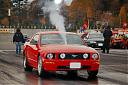
Lets see........In the first 2,000 miles I........<span style='color:blue'>Made over 30 passes at the Track.
Hit the rev limmiter numerous times.8 to 10 DonutsMelted four Sparkplugs with 150 Shot of Nitrous Oxide
<span style='color:gray'><span style='color urple'>Shifted into 2nd at over 100MPH with Nitrous On</span></span>.
Leave the line at 5,000 rpm with slicks on.</span>She still purrs like a lion and blasts of 11 second ET,s
Hit the rev limmiter numerous times.8 to 10 DonutsMelted four Sparkplugs with 150 Shot of Nitrous Oxide
<span style='color:gray'><span style='color
urple'>Shifted into 2nd at over 100MPH with Nitrous On</span></span>.Leave the line at 5,000 rpm with slicks on.</span>She still purrs like a lion and blasts of 11 second ET,s
Cobra Member
Joined: February 20, 2005
Posts: 1,292
Likes: 0
Mike, you still take the cake. Next season is going to get interesting when I get back to the track with a full tune but there will be quite a few people in the 10s about that time too.
I was harder on my car for the first few months after getting it than I am now, Im taking my gas mileage concerns with easy footing now. 190-200 miles on a tank means I have a lead foot with too many WOT shifts on the highway. :P
-Dan
I was harder on my car for the first few months after getting it than I am now, Im taking my gas mileage concerns with easy footing now. 190-200 miles on a tank means I have a lead foot with too many WOT shifts on the highway. :P
-Dan
Shelby GT500 Member
Joined: September 2, 2004
Posts: 2,594
Likes: 0
From: Chicago
Originally posted by mikem@December 8, 2005, 8:40 PM
Lets see........In the first 2,000 miles I........<span style='color:blue'>Made over 30 passes at the Track.
Hit the rev limmiter numerous times.8 to 10 DonutsMelted four Sparkplugs with 150 Shot of Nitrous Oxide
<span style='color:gray'><span style='colorurple'>Shifted into 2nd at over 100MPH with Nitrous On</span></span>.
Leave the line at 5,000 rpm with slicks on.</span>She still purrs like a lion and blasts of 11 second ET,s
Lets see........In the first 2,000 miles I........<span style='color:blue'>Made over 30 passes at the Track.
Hit the rev limmiter numerous times.8 to 10 DonutsMelted four Sparkplugs with 150 Shot of Nitrous Oxide
<span style='color:gray'><span style='color
urple'>Shifted into 2nd at over 100MPH with Nitrous On</span></span>.Leave the line at 5,000 rpm with slicks on.</span>She still purrs like a lion and blasts of 11 second ET,s

Cobra Member
Joined: November 27, 2004
Posts: 1,303
Likes: 2
From: Albuquerque, New Mexico
Originally posted by Cleveland+December 8, 2005, 1:48 AM--><div class='quotetop'>QUOTE(Cleveland @ December 8, 2005, 1:48 AM)</div><div class='quotemain'>I think you guys are confusing "proper" break-in results with the computer just learning your driving habits. These engines are already "broken in" by the time you take delivery. Any little differences you notice in mileage or power without modifications is pretty much your imagination.[/b]
Show me the proof on this statement. Most engines are not even started until the car gets to the end of the line when it is fired up to drive it to it's waiting area. Some higher performance engines get test ran on the dyno. But there are two problems: 1) The test run is no were near long enough to fully break in an engine. 2) I do not think the V8 in the 05/06 are in this group. They were doing it with some of the older cobra engines. If you think Ford is going to take the time to properly break in each of these cars, you are fooling yourself.
Originally posted by Cleveland@December 8, 2005, 1:48 AM
Even with receipts and MPG logging that shows otherwise doesnt prove the other point. You probably never drive with your foot into it the same way each and every day.
Even with receipts and MPG logging that shows otherwise doesnt prove the other point. You probably never drive with your foot into it the same way each and every day.
<!--QuoteBegin-Cleveland@December 8, 2005, 1:48 AM
If you want to make claims about increases in the above over time put your car into a lab and have real techs make claims.[/quote]
I'll make all the CLAIMS I want based on my own data. If you want better data, great. Feel free to ignore me.
If you want to pony up the cash, I would LOVE to see a truely statistically significant test performed on a group of GTs by a lab showing the effects of different break-in methods and the results in power output and fuel economy over time. Let's see: Two groups of cars. Thirteen cars per group (better make that 14 in case we have a problem with one of the test cars). 12000 "miles" test time per car (say 400 hours). Approximately 600 gallons of gas each.
If you are williing to write a check for about 2 million bucks, we can GET that lab data you need. And it WILL be statistically significant data. One car won't do it.

Double post
Sorry
Sorry
Cobra Member
Joined: February 20, 2005
Posts: 1,292
Likes: 0
Originally posted by RRRoamer@December 9, 2005, 8:11 AM
Show me the proof on this statement. Most engines are not even started until the car gets to the end of the line when it is fired up to drive it to it's waiting area. Some higher performance engines get test ran on the dyno. But there are two problems: 1) The test run is no were near long enough to fully break in an engine. 2) I do not think the V8 in the 05/06 are in this group. They were doing it with some of the older cobra engines. If you think Ford is going to take the time to properly break in each of these cars, you are fooling yourself.
True. And that is why I am looking at the average over the last 11k miles. It has slowly crept up. There are times when it is quite a bit higher (more highway or a lot of highway). There are times when it is a bit lower (all around town, more "playing"). But if you plot the date, it is very clearly increasing. My day job is process engineering. Finding TRENDS in datasets is what I get paid for. And it is very easy to see the TREND in my fuel economy.
I'll make all the CLAIMS I want based on my own data. If you want better data, great. Feel free to ignore me.
If you want to pony up the cash, I would LOVE to see a truely statistically significant test performed on a group of GTs by a lab showing the effects of different break-in methods and the results in power output and fuel economy over time. Let's see: Two groups of cars. Thirteen cars per group (better make that 14 in case we have a problem with one of the test cars). 12000 "miles" test time per car (say 400 hours). Approximately 600 gallons of gas each.
If you are williing to write a check for about 2 million bucks, we can GET that lab data you need. And it WILL be statistically significant data. One car won't do it.
Show me the proof on this statement. Most engines are not even started until the car gets to the end of the line when it is fired up to drive it to it's waiting area. Some higher performance engines get test ran on the dyno. But there are two problems: 1) The test run is no were near long enough to fully break in an engine. 2) I do not think the V8 in the 05/06 are in this group. They were doing it with some of the older cobra engines. If you think Ford is going to take the time to properly break in each of these cars, you are fooling yourself.
True. And that is why I am looking at the average over the last 11k miles. It has slowly crept up. There are times when it is quite a bit higher (more highway or a lot of highway). There are times when it is a bit lower (all around town, more "playing"). But if you plot the date, it is very clearly increasing. My day job is process engineering. Finding TRENDS in datasets is what I get paid for. And it is very easy to see the TREND in my fuel economy.
I'll make all the CLAIMS I want based on my own data. If you want better data, great. Feel free to ignore me.
If you want to pony up the cash, I would LOVE to see a truely statistically significant test performed on a group of GTs by a lab showing the effects of different break-in methods and the results in power output and fuel economy over time. Let's see: Two groups of cars. Thirteen cars per group (better make that 14 in case we have a problem with one of the test cars). 12000 "miles" test time per car (say 400 hours). Approximately 600 gallons of gas each.
If you are williing to write a check for about 2 million bucks, we can GET that lab data you need. And it WILL be statistically significant data. One car won't do it.
k, smart hiney
-Dan
I took the Owners manual literally
BREAKING-IN YOUR VEHICLE
Your vehicle does not need an extensive break-in. Try not to drive
continuously at the same speed for the first 1,000 miles (1,600 km) of
new vehicle operation. Vary your speed frequently in order to give the
moving parts a chance to break in.
Do not add friction modifier compounds or special break-in oils during
the first few thousand miles (kilometers) of operation, since these
additives may prevent piston ring seating. See Engine oil in the
Maintenance and Specifications chapter for more information on oil
usage.
I began varying the rpm between 2000 and 6000 every 4.5 seconds from the moment I received my car.
My first pass down the track was with 300km (180mi.) on it. I now have 15000km (9300mi.) on it with 550 1/4mi.runs on it.
It runs pretty quick and doesn't take a drop of oil.
I find something very bizarre about my trend data.
For some reason every Sunday and every Tuesday and Friday evenings my fuel consumption increases by 70%
It goes from 14L/100km to 24L/100km
BREAKING-IN YOUR VEHICLE
Your vehicle does not need an extensive break-in. Try not to drive
continuously at the same speed for the first 1,000 miles (1,600 km) of
new vehicle operation. Vary your speed frequently in order to give the
moving parts a chance to break in.
Do not add friction modifier compounds or special break-in oils during
the first few thousand miles (kilometers) of operation, since these
additives may prevent piston ring seating. See Engine oil in the
Maintenance and Specifications chapter for more information on oil
usage.
I began varying the rpm between 2000 and 6000 every 4.5 seconds from the moment I received my car.
My first pass down the track was with 300km (180mi.) on it. I now have 15000km (9300mi.) on it with 550 1/4mi.runs on it.
It runs pretty quick and doesn't take a drop of oil.
Originally posted by RRRoamer@December 9, 2005, 11:11 AM
And that is why I am looking at the average over the last 11k miles. It has slowly crept up. There are times when it is quite a bit higher (more highway or a lot of highway). There are times when it is a bit lower (all around town, more "playing"). But if you plot the date, it is very clearly increasing. My day job is process engineering. Finding TRENDS in datasets is what I get paid for. And it is very easy to see the TREND in my fuel economy.
And that is why I am looking at the average over the last 11k miles. It has slowly crept up. There are times when it is quite a bit higher (more highway or a lot of highway). There are times when it is a bit lower (all around town, more "playing"). But if you plot the date, it is very clearly increasing. My day job is process engineering. Finding TRENDS in datasets is what I get paid for. And it is very easy to see the TREND in my fuel economy.
For some reason every Sunday and every Tuesday and Friday evenings my fuel consumption increases by 70%
It goes from 14L/100km to 24L/100km


Thread
Thread Starter
Forum
Replies
Last Post