


New 2008 Order Guide W/Bullitt

Needs to be more Astony

Joined: October 4, 2004
Posts: 8,610
Likes: 5
From: Volo, IL
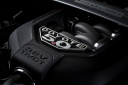
doesn't make sense at all unless they changed a lot more in the engine.
normal GT makes peak power at 5750rpm. You are going to loss so much power letting it rev to 6500. Even if the a new dampner can make it safe to 6500 doesn't mean you would want to rev that high.
If they really is going to be a higher redline tach you would need heads that flow better and a cam to support peak power that late.
normal GT makes peak power at 5750rpm. You are going to loss so much power letting it rev to 6500. Even if the a new dampner can make it safe to 6500 doesn't mean you would want to rev that high.
If they really is going to be a higher redline tach you would need heads that flow better and a cam to support peak power that late.



Legacy TMS Member
Joined: February 8, 2004
Posts: 3,399
Likes: 7
From: Cincinnati, OH
Needs to be more Astony
Joined: October 4, 2004
Posts: 8,610
Likes: 5
From: Volo, IL
there is one of two things that has to be wrong.
Either the info about a 6500 redline is wrong, which i think is most likly, or there are a lot more engine upgrades that have been lead on.
Either the info about a 6500 redline is wrong, which i think is most likly, or there are a lot more engine upgrades that have been lead on.
Bullitt Member
Joined: October 13, 2004
Posts: 437
Likes: 1
Team Mustang Source
Joined: January 31, 2004
Posts: 3,045
Likes: 2
From: NYC
http://www.stangnet.com/Ford-Mustang...ts-070918.html

nice find...whats the deal with the cutouts on the rear facia of the red car?
Team Mustang Source Legacy Member
Joined: September 2, 2004
Posts: 1,679
Likes: 5
From: Las Vegas
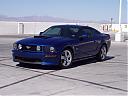
The bottom of the grill on the red one is interesting. There's a whole line across the bottom that wasn't on the bare grill they showed at SEMA last year (pic below). I don't see how they're going to hold the sides, on, but that is an interesting detail along the bottom.
Bullitt Member
Joined: October 13, 2004
Posts: 437
Likes: 1
Legacy TMS Member
Joined: February 8, 2004
Posts: 3,399
Likes: 7
From: Cincinnati, OH

Bullitt Member
Joined: October 13, 2004
Posts: 437
Likes: 1
The air-fuel mixture entering an engine behaves differently at different engine speeds and loads. At low engine speeds and light loads, relatively little air-fuel mixture is drawn into the cylinders in a given time period, so it moves relatively slowly through the intake runners and into the cylinders. At high engine speeds, the intake mixture speeds up, as a larger volume passes through the intake runners over the same time period.
One of the challenges involved in squeezing the utmost efficiency out of each drop of fuel is to assure that it mixes thoroughly with air, in the right ratio, before it is burned in the cylinders. This is easiest when the air is moving quickly.
At lower speeds and lighter loads, the new three-valve engine uses an electronically controlled metal flap at the end of each intake runner – eight in all. This Charge Motion Control Valve was specially shaped, through CAD modeling and testing, to speed up the intake charge and induce a tumble effect in the combustion cylinder. This causes the fuel to mix more thoroughly, and to burn quickly and efficiently, with reduced emissions, particularly at idle.
The CMCVs are controlled by an electronic motor, and open at a predetermined point as engine speed increases. At higher RPM, they do not affect the intake charge at all. This allows undisturbed maximum flow into the combustion chambers at wide-open throttle. The CMCV motor is sound insulated, so its operation remains transparent to vehicle occupants.
Peter Dowding, manager of Ford's Modular V-8 and V-10 engines
"Another important detail is that the last discharge of any exhaust stroke is carbon-rich, and VCT allows us to attract that charge back into the chamber and re-burn it, which is very, very good for HC emissions. Our Charge Motion Control Valves can generate turbulence in the incoming fresh charge, mixing and swirling the air and fuel together with that previously-burned gas before igniting it. That is very significant because it allows us not only to reduce [NO.sub.x] but also to re-burn that HC-rich discharge." As a result, the previous engine's external EGR (exhaust gas recirculation) system is no longer needed.

