


Article on AOL about the 05 Stang and Vette

Thread Starter
Cobra R Member

Joined: January 30, 2004
Posts: 1,725
Likes: 3
From: Florida
Nice Article about how designers keep a cars image even when making changes, It Has a Quote from J Mays,
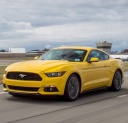
Coming this fall, the latest Mustang design is meant, in the words of J Mays, Ford's vice president for design, "to look like it's going to kick your hiney."
<span style='color:#FF0000'>Edit, J Mays Didn't Use the Word Hiney! Why is it that the "A" word is in the Bible but we can't say it here? LM"A"O
Check out the Links Below</span>
Great American Cars: New and Improved
Mustang Gallery
Vette Gallery
Coming this fall, the latest Mustang design is meant, in the words of J Mays, Ford's vice president for design, "to look like it's going to kick your hiney."
<span style='color:#FF0000'>Edit, J Mays Didn't Use the Word Hiney! Why is it that the "A" word is in the Bible but we can't say it here? LM"A"O
Check out the Links Below</span>
Great American Cars: New and Improved
Mustang Gallery
Vette Gallery
Thread Starter
Cobra R Member
Joined: January 30, 2004
Posts: 1,725
Likes: 3
From: Florida
Great American cars: New and improved
Mustangs and 'Vettes are instantly recognizable classics. Here's how designers keep them that way.
July 2, 2004: 9:47 PM EDT
By Peter Valdes-Dapena, CNN/Money staff writer
NEW YORK (CNN/Money) - For some cars, there are clearly identifiable characteristics that endure. Perhaps it's just a proportion or a general shape, but it can identify a car for decades, through style changes, manufacturing improvements and marketing shifts.
As America gets ready to celebrate its national holiday, we decided to look at two cars that, more than any others, have become national symbols. The Ford Mustang and Chevrolet Corvette have managed to retain their essential characters over decades.
Call it "personality," perhaps. Or maybe "mystique."
Both are being reintroduced this year as newly redesigned 2005 models, mystique very much intact.
Keys to the Mustang
The essentials of what marks a Mustang are fairly simple and well known. The primary factor is its proportions: short deck, long hood. (The "deck" is what might commonly be called the trunk, except that it exists on versions that don't actually have separate trunks.)
The visual implication of this is "We could have given you more luggage space but, frankly, we needed it for the engine."
In preparation for the new 2005 Mustang, Ford's designers went through what J Mays, Ford's vice president for design, calls "a visual audit of Mustangness."
"Collective memory is really what we work with when we redesign something like a Mustang," said Mays.
There are as many as 20 different historical visual cues, said Mays. Cues appear on the exterior as well as the interior, including the steering wheel design and elongated numbers on the gauges.
For example, there's the taillight design composed of a pair of three vertical red bars. Those three bars have changed shape, becoming more or less square and even disappearing altogether for a time.
The new Mustang also has a subtle version of the pseudo-vents that appeared on early Mustangs. Those side channels were part of the original design of the Mustang when it was introduced in 1964.
As originally designed, those vents were merely elongated dents trimmed in chrome at the back end, just behind the doors. In high-performance versions of the Mustang, intended for racing, the vents were opened to provide air flow to cool the rear brakes, said Jerry Heasley, author of more than 10 books about the Mustang.
In the new 2005 Mustang, the vent is reduced to a L-shaped visual suggestion, something Mays refers to as "hockey sticks."
With the new, fifth-generation Mustang, design inspiration wasn't drawn from the earliest Mustangs. Instead, designers looked to the late 1960s and early '70s, an era that included what auto enthusiasts now call "The horsepower wars."
The Mustang underwent major revisions during those years. It became wider to fit larger optional engines between the front wheel wells.
But it's the attitude behind that power that the new Mustang most notably carries. The new 2005 Mustang replaces hints of round-edged playfulness found in 1990s Mustangs with a razor sharp sense of purpose. There are no malt shops or drive-ins in this Mustang. Instead, there is the illegal drag race after the drive-in is closed.
"It looks as though it's going to kick your hiney," said Mays.
The impression is quite deliberate. The car's forward-sloping front end and round headlights set in deep trapezoidal wells lend an ominous air.
To Mays, there are two types of Mustang buyers: those over 30 and those under. Over the coming years, this car will have to appeal to both. The trick, said Mays, is balancing historical references that call forth the memories people have of Mustangs and placing all of that into a car with a clearly modern stance.
Adding to the tough-guy image is the fact that the new edition will not wear a name-tag. The car is so clearly a Mustang that putting the word "Mustang" on the car was regarded as pointless, said Ford spokeswoman Jennifer Flake.
That back-alley urban swagger is something Mays said he would like to see in more Ford vehicles in the future.
"There's nothing wrong with riding around in a car that looks like Joe Pesci might be hiding a body in the trunk," said Mays. "In fact, there's something perversely appealing about that."
Keys to the 'Vette
The idea of the Corvette was, from the beginning, fairly simple and has remained largely unchanged. Europeans had 2-seater sports cars. Americans should have one, right?
It took a few years from Corvette's 1953 introduction, after an enthusiastic public response to a "dream car" version, before the car became something that could truly be called a sports car. Over its life span, there have been five major generations of Corvette, not including the 2005 version to be sold this fall.
The car has gone through a few really radical changes in design over its life, but it has settled into a format that its designers are reluctant to mess too much with.
"It respects the fantastic designs that Corvette has had over the years," said David Hill, General Motors line executive for Corvette.
There are three fundamental things that every true Corvette must have, Hill said. Those are passionate design, state-of-the-art technology and tremendous value.
To Hill, passionate design means, essentially, curves. One failing of more recent Corvette designs, Hill said, has been their "corporate" look. In contrast to the swooping fender lines and narrow "waist" of the 1968 to '83 cars, 'Vettes from '84 to '97 had much straighter, more businesslike, lines. Instead of calling to mind sea predators or athletes, they called to mind General Motors.
In the "C5" 'Vettes, the fifth major redesign, introduced in 1997 softer lines and curves were reintroduced. In the more compact C6 'Vette, the curves are back, this time contrasted with knife-sharp edges around the side air vents. In photos, the changes look subtle.
"It would be wrong to make a Corvette so startlingly different than what a Corvette used to look like," said Hill.
There are also certain styling cues that Corvettes have retained. An overall low, long and wide aerodynamic shape is one. The car's four round taillights are another. First introduced on the 1961 Corvette, they have continued with some modifications in the generally rounded shape.
The one real break with tradition on the car is the headlights. Since the 1963 model Corvettes have had retractable headlights. Lowering the headlights improves aerodynamics when they are not in use, but raising them disrupts air flow. With improvements in headlight technology, there was simply no reason to bear that cost any longer.
In the Corvette, the long hood and short deck concept used in the Mustang is carried to an extreme. The design of the C6 is intended to accentuate the bluntness of car's tail even further.
Hill calls the C6 "the most perfect Corvette that's ever been," extolling the car's interior comforts as well as its 186 mile per hour top speed, the highest for any 'Vette so far.
"It goes like stink but it's very comfortable," he said.
Mustangs and 'Vettes are instantly recognizable classics. Here's how designers keep them that way.
July 2, 2004: 9:47 PM EDT
By Peter Valdes-Dapena, CNN/Money staff writer
NEW YORK (CNN/Money) - For some cars, there are clearly identifiable characteristics that endure. Perhaps it's just a proportion or a general shape, but it can identify a car for decades, through style changes, manufacturing improvements and marketing shifts.
As America gets ready to celebrate its national holiday, we decided to look at two cars that, more than any others, have become national symbols. The Ford Mustang and Chevrolet Corvette have managed to retain their essential characters over decades.
Call it "personality," perhaps. Or maybe "mystique."
Both are being reintroduced this year as newly redesigned 2005 models, mystique very much intact.
Keys to the Mustang
The essentials of what marks a Mustang are fairly simple and well known. The primary factor is its proportions: short deck, long hood. (The "deck" is what might commonly be called the trunk, except that it exists on versions that don't actually have separate trunks.)
The visual implication of this is "We could have given you more luggage space but, frankly, we needed it for the engine."
In preparation for the new 2005 Mustang, Ford's designers went through what J Mays, Ford's vice president for design, calls "a visual audit of Mustangness."
"Collective memory is really what we work with when we redesign something like a Mustang," said Mays.
There are as many as 20 different historical visual cues, said Mays. Cues appear on the exterior as well as the interior, including the steering wheel design and elongated numbers on the gauges.
For example, there's the taillight design composed of a pair of three vertical red bars. Those three bars have changed shape, becoming more or less square and even disappearing altogether for a time.
The new Mustang also has a subtle version of the pseudo-vents that appeared on early Mustangs. Those side channels were part of the original design of the Mustang when it was introduced in 1964.
As originally designed, those vents were merely elongated dents trimmed in chrome at the back end, just behind the doors. In high-performance versions of the Mustang, intended for racing, the vents were opened to provide air flow to cool the rear brakes, said Jerry Heasley, author of more than 10 books about the Mustang.
In the new 2005 Mustang, the vent is reduced to a L-shaped visual suggestion, something Mays refers to as "hockey sticks."
With the new, fifth-generation Mustang, design inspiration wasn't drawn from the earliest Mustangs. Instead, designers looked to the late 1960s and early '70s, an era that included what auto enthusiasts now call "The horsepower wars."
The Mustang underwent major revisions during those years. It became wider to fit larger optional engines between the front wheel wells.
But it's the attitude behind that power that the new Mustang most notably carries. The new 2005 Mustang replaces hints of round-edged playfulness found in 1990s Mustangs with a razor sharp sense of purpose. There are no malt shops or drive-ins in this Mustang. Instead, there is the illegal drag race after the drive-in is closed.
"It looks as though it's going to kick your hiney," said Mays.
The impression is quite deliberate. The car's forward-sloping front end and round headlights set in deep trapezoidal wells lend an ominous air.
To Mays, there are two types of Mustang buyers: those over 30 and those under. Over the coming years, this car will have to appeal to both. The trick, said Mays, is balancing historical references that call forth the memories people have of Mustangs and placing all of that into a car with a clearly modern stance.
Adding to the tough-guy image is the fact that the new edition will not wear a name-tag. The car is so clearly a Mustang that putting the word "Mustang" on the car was regarded as pointless, said Ford spokeswoman Jennifer Flake.
That back-alley urban swagger is something Mays said he would like to see in more Ford vehicles in the future.
"There's nothing wrong with riding around in a car that looks like Joe Pesci might be hiding a body in the trunk," said Mays. "In fact, there's something perversely appealing about that."
Keys to the 'Vette
The idea of the Corvette was, from the beginning, fairly simple and has remained largely unchanged. Europeans had 2-seater sports cars. Americans should have one, right?
It took a few years from Corvette's 1953 introduction, after an enthusiastic public response to a "dream car" version, before the car became something that could truly be called a sports car. Over its life span, there have been five major generations of Corvette, not including the 2005 version to be sold this fall.
The car has gone through a few really radical changes in design over its life, but it has settled into a format that its designers are reluctant to mess too much with.
"It respects the fantastic designs that Corvette has had over the years," said David Hill, General Motors line executive for Corvette.
There are three fundamental things that every true Corvette must have, Hill said. Those are passionate design, state-of-the-art technology and tremendous value.
To Hill, passionate design means, essentially, curves. One failing of more recent Corvette designs, Hill said, has been their "corporate" look. In contrast to the swooping fender lines and narrow "waist" of the 1968 to '83 cars, 'Vettes from '84 to '97 had much straighter, more businesslike, lines. Instead of calling to mind sea predators or athletes, they called to mind General Motors.
In the "C5" 'Vettes, the fifth major redesign, introduced in 1997 softer lines and curves were reintroduced. In the more compact C6 'Vette, the curves are back, this time contrasted with knife-sharp edges around the side air vents. In photos, the changes look subtle.
"It would be wrong to make a Corvette so startlingly different than what a Corvette used to look like," said Hill.
There are also certain styling cues that Corvettes have retained. An overall low, long and wide aerodynamic shape is one. The car's four round taillights are another. First introduced on the 1961 Corvette, they have continued with some modifications in the generally rounded shape.
The one real break with tradition on the car is the headlights. Since the 1963 model Corvettes have had retractable headlights. Lowering the headlights improves aerodynamics when they are not in use, but raising them disrupts air flow. With improvements in headlight technology, there was simply no reason to bear that cost any longer.
In the Corvette, the long hood and short deck concept used in the Mustang is carried to an extreme. The design of the C6 is intended to accentuate the bluntness of car's tail even further.
Hill calls the C6 "the most perfect Corvette that's ever been," extolling the car's interior comforts as well as its 186 mile per hour top speed, the highest for any 'Vette so far.
"It goes like stink but it's very comfortable," he said.


The Mustang Source FOUNDER
Joined: January 29, 2004
Posts: 9,890
Likes: 11
From: Vestavia Hills, Ala.
Originally posted by TampaBear67@July 4, 2004, 4:38 PM
Why is it that the "A" word is in the Bible but we can't say it here?
Why is it that the "A" word is in the Bible but we can't say it here?


Cobra Member
Joined: January 31, 2004
Posts: 1,261
Likes: 0
The word "poohead" (use your imagination) is also in the Bible, but in context, it's actually someone's name (shuh-thead). Just like in context, "hiney" in the Bible does not really mean "hiney." Confused yet?

GTR Member
Joined: January 30, 2004
Posts: 4,743
Likes: 4
From: NE PA
Originally posted by BlueStangVert+July 4, 2004, 5:42 PM--></div><table border='0' align='center' width='95%' cellpadding='3' cellspacing='1'><tr><td>QUOTE (BlueStangVert @ July 4, 2004, 5:42 PM)</td></tr><tr><td id='QUOTE'> <!--QuoteBegin-TampaBear67@July 4, 2004, 4:38 PM
Why is it that the "A" word is in the Bible but we can't say it here?
Why is it that the "A" word is in the Bible but we can't say it here?
 wn3d:
wn3d:

Thread
Thread Starter
Forum
Replies
Last Post
Evil_Capri
Motorsports
2
Sep 11, 2015 08:04 PM