


Extremely uneven wear on rear brakes. Had to be changed at only 15k miles


Thread Starter
Member
Joined: February 10, 2012
Posts: 30
Likes: 0
From: Sherman Oaks, CA
Extremely uneven wear on rear brakes. Had to be changed at only 15k miles
Hey all, don't know if you remember my thread a while back about my car "supposedly" needing its brakes replaced at 10,500 miles, only for it to end up being a "misdiagnosis" on the part of the tech.
For those that don't remember and don't want to read the old thread, the car is a 2011 GT with Brembos.
Here's the thread:
https://themustangsource.com/f726/i-...lready-505838/
If you don't want to read the whole thread, here was the post when I said everything was supposedly A-OK:
https://themustangsource.com/f726/i-...3/#post6284954
Well anyways my car has 15k miles on it now and I really did need to get them replaced this time. I was about due for my oil change and noticed that the brakes were squeaking a bit. Not an unusual amount of noise, but they noise they make when they start getting low. Since I was nearing my oil change and the noise wasn't terrible, I figured I could just wait on getting the brakes looked at till I got the oil change.
Only a week or so later, the right rear starts making a terrible GRINDING sound. Within only 2 days, the sound is so loud, I took it to the dealer immediately.
Turns out the right rear pad was ground down COMPLETELY TO THE METAL, yet strangely the drivers side appears to have at least another few thousand miles left. See the pics for yourself...
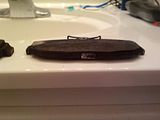
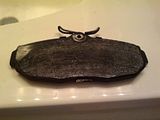
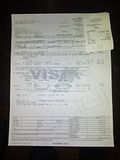
Ok so I know that needing to get your brakes replaced at 15k miles is...a little early, but not unheard of. However, I find it extremely odd that one side is wearing so much more quickly than the other. Any ideas why this would be happening?
The tech at the dealer said they tested the strength of the calipers and they were both applying equal pressure...I'd hope he's not lying to my face, but something is clearly strange here. He did say that it was a bit "weird" but at the same time, there was nothing obviously wrong.
A few members suggested in a previous thread (which was basically a duplicate of this one, I'm reposting in this forum in hope of getting help) that I the right rear caliper may be sticking.
Deysha, can you help me again?
For those that don't remember and don't want to read the old thread, the car is a 2011 GT with Brembos.
Here's the thread:
https://themustangsource.com/f726/i-...lready-505838/
If you don't want to read the whole thread, here was the post when I said everything was supposedly A-OK:
https://themustangsource.com/f726/i-...3/#post6284954
Well anyways my car has 15k miles on it now and I really did need to get them replaced this time. I was about due for my oil change and noticed that the brakes were squeaking a bit. Not an unusual amount of noise, but they noise they make when they start getting low. Since I was nearing my oil change and the noise wasn't terrible, I figured I could just wait on getting the brakes looked at till I got the oil change.
Only a week or so later, the right rear starts making a terrible GRINDING sound. Within only 2 days, the sound is so loud, I took it to the dealer immediately.
Turns out the right rear pad was ground down COMPLETELY TO THE METAL, yet strangely the drivers side appears to have at least another few thousand miles left. See the pics for yourself...


Ok so I know that needing to get your brakes replaced at 15k miles is...a little early, but not unheard of. However, I find it extremely odd that one side is wearing so much more quickly than the other. Any ideas why this would be happening?
The tech at the dealer said they tested the strength of the calipers and they were both applying equal pressure...I'd hope he's not lying to my face, but something is clearly strange here. He did say that it was a bit "weird" but at the same time, there was nothing obviously wrong.
A few members suggested in a previous thread (which was basically a duplicate of this one, I'm reposting in this forum in hope of getting help) that I the right rear caliper may be sticking.
Deysha, can you help me again?


Bullitt Member

Joined: April 14, 2012
Posts: 368
Likes: 0
From: SoCal
As technology progresses so do the problems associated with self same advances....
I can be completely off base here but depending on how Ford has set up the traction control -- BMW uses the rear brakes (in certain cases of wheel slippage) to emulate a limited slip differential. this cases the rear brakes to wear out pretty quickly if the driver is constantly in the throttle.
Slowing rear wheel slip is a major part of traction control, and these cars (based on my driving) do need a lot of assistance keeping the tail end hooked up. How much do you use the AdvanceTrac Sport Mode?
I can be completely off base here but depending on how Ford has set up the traction control -- BMW uses the rear brakes (in certain cases of wheel slippage) to emulate a limited slip differential. this cases the rear brakes to wear out pretty quickly if the driver is constantly in the throttle.
Slowing rear wheel slip is a major part of traction control, and these cars (based on my driving) do need a lot of assistance keeping the tail end hooked up. How much do you use the AdvanceTrac Sport Mode?
Bullitt Member
Joined: March 19, 2012
Posts: 457
Likes: 0
From: Louisville, KY
Don't remember exactly how these brakes systems are set up, but I'm very sure that these have little metal brackets or tabs or slides (whatever you want to call them) that hold them in place on both ends and allow them to move in the one direction they are suppose to. Sometimes if these slides are not lubricated or something else happens to these then the brake pad can snag and will not release completely on one side. This can very well cause the uneven wear pattern you see before yourself
Bullitt Member
Joined: April 14, 2012
Posts: 368
Likes: 0
From: SoCal
Ok, its a fair statement that we don't know for sure if its the traction control causing the problem. lets look at some of the proposals tossed up..
1) hanging caliper or rusted slider -- normal (not every case though) signs of a caliper hanging would be "heat checked" pad material -- indicating the pad was not allowed to cool down sufficiently during operation. if the caliper is hanging there may be grooving of the rotor -- possibly requiring replacement; a clear sign that the caliper is not releasing properly. along with this there should be signs of abnormal heat generated on the hardware and possibly the caliper itself.
2) if the caliper was hanging up to the point of wearing out a single pad, that might be a sign of uneven brake application (slider not lubed) but then only one pad should be affected, not both evenly worn out -- as shown in the OPs photo -- ??
3) if there was a bad proportioning valve which takes into account the difference between the front and rear pressure requirements both rear pads should (or would have the same wear pattern).
4) if there was a blockage in the line, there should be a fault in the ABS or traction control system as it would not be able to pulse the specific brake caliper properly -- that is an automated function of the safety system which has be reported as a failure.
5) during power application to a limited slip differential the right wheel has a tendency to spin faster (until the diff clutches engage) -- OP stated that the right side pads were worn faster than the left rears.
ABS and Dynamic Traction Control works without human intervention, at a rate which is quicker than we can guessimate -- the force required to slow the wheel down to control the car is accomplished by the ABS pump; this value is not humanly determinable -- but its quick enough to keep us out of trouble during emergency braking.
1) hanging caliper or rusted slider -- normal (not every case though) signs of a caliper hanging would be "heat checked" pad material -- indicating the pad was not allowed to cool down sufficiently during operation. if the caliper is hanging there may be grooving of the rotor -- possibly requiring replacement; a clear sign that the caliper is not releasing properly. along with this there should be signs of abnormal heat generated on the hardware and possibly the caliper itself.
2) if the caliper was hanging up to the point of wearing out a single pad, that might be a sign of uneven brake application (slider not lubed) but then only one pad should be affected, not both evenly worn out -- as shown in the OPs photo -- ??
3) if there was a bad proportioning valve which takes into account the difference between the front and rear pressure requirements both rear pads should (or would have the same wear pattern).
4) if there was a blockage in the line, there should be a fault in the ABS or traction control system as it would not be able to pulse the specific brake caliper properly -- that is an automated function of the safety system which has be reported as a failure.
5) during power application to a limited slip differential the right wheel has a tendency to spin faster (until the diff clutches engage) -- OP stated that the right side pads were worn faster than the left rears.
ABS and Dynamic Traction Control works without human intervention, at a rate which is quicker than we can guessimate -- the force required to slow the wheel down to control the car is accomplished by the ABS pump; this value is not humanly determinable -- but its quick enough to keep us out of trouble during emergency braking.
Cobra Member
Joined: August 5, 2008
Posts: 1,369
Likes: 0
From: Arvada, CO
Another thing is there are two triangle shaped cutouts on the piston itself, that have to align with small pegs on the back of the pads. If not, you'll get uneven wear/pressure, though not sure it'd definitely be the case here. Just make sure the pegs go in the cutouts when re-installing.
Thread Starter
Member
Joined: February 10, 2012
Posts: 30
Likes: 0
From: Sherman Oaks, CA
I'm taking my car into the dealer later this week (either Thursday or Friday) to get my oil changed. I'm sure they'll look at the brakes again to see if they're wearing unevenly already.
Hopefully they don't just throw their hands up in the air and say "that's weird!" like they did last time.
Hopefully they don't just throw their hands up in the air and say "that's weird!" like they did last time.
Thread Starter
Member
Joined: February 10, 2012
Posts: 30
Likes: 0
From: Sherman Oaks, CA
I took my car in for its oil change and they didn't find anything wrong with the brakes yet. Granted, they only have 500 miles on them but nothing appeared flagrantly wrong. I'll have to keep an eye on them...
Bullitt Member
Joined: April 14, 2012
Posts: 368
Likes: 0
From: SoCal

Thread
Thread Starter
Forum
Replies
Last Post

