


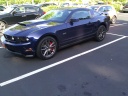
2008 HID Headlight Picture

GT Member

Joined: October 18, 2004
Posts: 181
Likes: 0
Come on, Ford and GM are the last to impliment anything. If LEDs are just launching on Lexus and Audi, Ford is ten years away from launching a car with LED headlights. Heck, I would settle for LED taillights on a Ford product.

Legacy TMS Member
Joined: October 2, 2006
Posts: 4,777
Likes: 16
From: Southeast Michigan

As for the bi-xenon setups, lots of OEMs have them. Ford just isn't one of these OEMs.

V6 Member
Joined: January 10, 2007
Posts: 72
Likes: 0
Please refer to this PDF on page 60 (PDF page is #46) where they have a table of the results.
The gray "HLB" is the standard halogen setup. IR-TIS is the thermal imaging system, and the UVA stuff is just UV lights combined with the standard halogen.
Notice how HIDs are way down there with about 100 feet shorter recognition distances.
I used to think HIDs were the best, but after more research I tend to agree with the lighting experts that the color is what fools the eye into thinking it is better. There's no replacement for an efficient halogen setup considering the price of a replaceable halogen capsule is peanuts compared to a ballast or HID lamp capsule.
The gray "HLB" is the standard halogen setup. IR-TIS is the thermal imaging system, and the UVA stuff is just UV lights combined with the standard halogen.
Notice how HIDs are way down there with about 100 feet shorter recognition distances.
I used to think HIDs were the best, but after more research I tend to agree with the lighting experts that the color is what fools the eye into thinking it is better. There's no replacement for an efficient halogen setup considering the price of a replaceable halogen capsule is peanuts compared to a ballast or HID lamp capsule.
1 who paid for this study?
2 where has this been published in the mainstream media?
3 are halogen manufacturers gloating? (please no conspiracy theories)
Don't get me wrong, I'd love to save the money and not refit, but I just know what I see with my eyes. And when someone is next to me in the dark and they have HIDs, they seem to be lighting up the road for me.
Legacy TMS Member
Joined: October 2, 2006
Posts: 4,777
Likes: 16
From: Southeast Michigan
Here is where I obtained the PDF:
http://www.tfhrc.gov/safety/hsis/pubs/envseries.htm
1). Federal Highway Administration (GOV)
2). I haven't seen it mentioned in "mainstream media", but it's a government funded research project conducted by Virginia Tech.
3). I haven't heard anything from Sylvania, Federal Mogul, or GE but I have seen peak lumen figures for halogens vs HIDs; there are no clear winners because it is dependent on how the lamp assembly is designed.
Again, the human eye perceives white light very differently and it appears HIDs are brighter because you can see the light on the road. That doesn't necessarily mean it is putting out more light farther down the road.
http://www.tfhrc.gov/safety/hsis/pubs/envseries.htm
1). Federal Highway Administration (GOV)
2). I haven't seen it mentioned in "mainstream media", but it's a government funded research project conducted by Virginia Tech.
3). I haven't heard anything from Sylvania, Federal Mogul, or GE but I have seen peak lumen figures for halogens vs HIDs; there are no clear winners because it is dependent on how the lamp assembly is designed.
Again, the human eye perceives white light very differently and it appears HIDs are brighter because you can see the light on the road. That doesn't necessarily mean it is putting out more light farther down the road.



V6 Member
Joined: January 10, 2007
Posts: 72
Likes: 0
Here is where I obtained the PDF:
http://www.tfhrc.gov/safety/hsis/pubs/envseries.htm
1). Federal Highway Administration (GOV)
2). I haven't seen it mentioned in "mainstream media", but it's a government funded research project conducted by Virginia Tech.
3). I haven't heard anything from Sylvania, Federal Mogul, or GE but I have seen peak lumen figures for halogens vs HIDs; there are no clear winners because it is dependent on how the lamp assembly is designed.
Again, the human eye perceives white light very differently and it appears HIDs are brighter because you can see the light on the road. That doesn't necessarily mean it is putting out more light farther down the road.
http://www.tfhrc.gov/safety/hsis/pubs/envseries.htm
1). Federal Highway Administration (GOV)
2). I haven't seen it mentioned in "mainstream media", but it's a government funded research project conducted by Virginia Tech.
3). I haven't heard anything from Sylvania, Federal Mogul, or GE but I have seen peak lumen figures for halogens vs HIDs; there are no clear winners because it is dependent on how the lamp assembly is designed.
Again, the human eye perceives white light very differently and it appears HIDs are brighter because you can see the light on the road. That doesn't necessarily mean it is putting out more light farther down the road.
I seem to remember sometime ago that consumer reports did a test with black objects and found that a Mazda 5 with halogens had the best "throw" of light.
Bullitt Member
Joined: October 23, 2006
Posts: 410
Likes: 0
You hears wrong. I have the HIDs and compared to the stock Mustang halogens, they are MUCH better. I don;t care what some study that never looked through my windshield at night thinks. For MY application, they are just flat wrong. The white lines and ALL objects ae considerably brighter and more vivid.
Perhaps in a theoretical world, you could design a halogen system to work better than an HID. But in my real world exmple, not the case.
Legacy TMS Member
Joined: October 2, 2006
Posts: 4,777
Likes: 16
From: Southeast Michigan
You hears wrong. I have the HIDs and compared to the stock Mustang halogens, they are MUCH better. I don;t care what some study that never looked through my windshield at night thinks. For MY application, they are just flat wrong. The white lines and ALL objects ae considerably brighter and more vivid.
Perhaps in a theoretical world, you could design a halogen system to work better than an HID. But in my real world exmple, not the case.
Perhaps in a theoretical world, you could design a halogen system to work better than an HID. But in my real world exmple, not the case.
And again, the main reason why people perceive HIDs to be superior (from a driver's perspective) is because the human eye perceives white light quite differently from everything else (almost like pure glare) and does not have any correlation with more light being thrown down the road. In fact, if you read the PDF, they found UV lights to work well with the Halogens.
Most high end European and Japanese luxury sports cars (including the Audi R8 which is a $110,000 super car that has LED headlamps) use projector assemblies and not reflector based HID assemblies. There is a good reason why the 2008 Mustang HIDs appear to cost $525 MSRP (hint, it's cheaper than projector HIDs). Most projector HIDs are a $1000+ option on foreign cars.
V6 Member
Joined: January 10, 2007
Posts: 72
Likes: 0
[/quote]
In fact, if you read the PDF, they found UV lights to work well with the Halogens.
Most high end European and Japanese luxury sports cars (including the Audi R8 which is a $110,000 super car that has LED headlamps) use projector assemblies and not reflector based HID assemblies. There is a good reason why the 2008 Mustang HIDs appear to cost $525 MSRP (hint, it's cheaper than projector HIDs). Most projector HIDs are a $1000+ option on foreign cars.[/quote]
Don't the UV lights require a monitor? (Sorry, I couldn't muddle through an entire gov't. report)
Projector / Reflector - What's the diff? Don't both have burners and 'reflect' the light against a parabolic background?
I'll go look at how stuff works in the meantime.
I went looking, but didn't find an answer to this Proj/Refl thing
In fact, if you read the PDF, they found UV lights to work well with the Halogens.
Most high end European and Japanese luxury sports cars (including the Audi R8 which is a $110,000 super car that has LED headlamps) use projector assemblies and not reflector based HID assemblies. There is a good reason why the 2008 Mustang HIDs appear to cost $525 MSRP (hint, it's cheaper than projector HIDs). Most projector HIDs are a $1000+ option on foreign cars.[/quote]
Don't the UV lights require a monitor? (Sorry, I couldn't muddle through an entire gov't. report)
Projector / Reflector - What's the diff? Don't both have burners and 'reflect' the light against a parabolic background?
I'll go look at how stuff works in the meantime.
I went looking, but didn't find an answer to this Proj/Refl thing
Legacy TMS Member
Joined: October 2, 2006
Posts: 4,777
Likes: 16
From: Southeast Michigan
I wish I could find the diagram that shows the difference between a projector and reflector. The projector basically projects the light from an assembly (directly facing the road) and has a sharp cut-off due to the use of a special optic. Some units have solenoids that move the optic around so the headlights can adjust automatically, while other units allow the entire projector to move up/down/left/right according to the vehicle dynamics.
A reflector assembly is basically the same thing we have now. The light source is shined against a bunch of reflective surfaces that eventually spread the light out onto the road.
My best guess is that Ford went this route because it was the cheapest way to get HIDs on the Stang.
A reflector assembly is basically the same thing we have now. The light source is shined against a bunch of reflective surfaces that eventually spread the light out onto the road.
My best guess is that Ford went this route because it was the cheapest way to get HIDs on the Stang.

Mach 1 Member
Joined: February 1, 2004
Posts: 940
Likes: 4
I heard the linclon MKS is going to have LED headlights.

Team Mustang Source
Joined: January 29, 2004
Posts: 6,730
Likes: 3
 One of the more annoying gimmicks on modern autos. Hard to beat sequential on an s197. With my 06 people were constantly pulling up next to me at lights completely amazed by them. The stockers have a nice full glow, much better then a string of dots that look like it just came off my 4-year old niece's newest hard plastic electronic toy from china. It costs virtually nothing extra to make an LED tail-light so its not some bs 'quality' thing. The people selling that concept are selling Americans Accords with 10k in additional profit for a few extra plastic pieces.
On the other hand, I would imagine LED headlights will be a much cheaper and less complicated solution then HID for the future once they figure out ways to style them into the cars. I just hope its not some ugly cluster like the cheapo replacement signals the squids put on their bikes.
Team Mustang Source
Joined: January 29, 2004
Posts: 6,730
Likes: 3
**** Doug I hardly ever see you 'round these parts of the web these days  For some reason we are rarely on the same threads.
here, present for you-blast from the past:

I saw some Caddy model that had this illuminated 'screen' that when the signal was on simply split the tail light in half, that was pretty sweet. DTS maybe??
For some reason we are rarely on the same threads.here, present for you-blast from the past:
I saw some Caddy model that had this illuminated 'screen' that when the signal was on simply split the tail light in half, that was pretty sweet. DTS maybe??
V6 Member
Joined: March 28, 2007
Posts: 60
Likes: 0
From: Seattle
You hears wrong. I have the HIDs and compared to the stock Mustang halogens, they are MUCH better. I don;t care what some study that never looked through my windshield at night thinks. For MY application, they are just flat wrong. The white lines and ALL objects ae considerably brighter and more vivid.
Perhaps in a theoretical world, you could design a halogen system to work better than an HID. But in my real world exmple, not the case.
Perhaps in a theoretical world, you could design a halogen system to work better than an HID. But in my real world exmple, not the case.
Legacy TMS Member
Joined: October 2, 2006
Posts: 4,777
Likes: 16
From: Southeast Michigan
Desoter Stang: Again, that is just how human eyes perceive white light. That doesn't mean you are seeing an extra 100 feet down the road versus halogen. So far jcthorne and your comments seem to support what the lighting experts have been saying about HIDs and white light all along.
The Audi R8's LED headlamps are a work of art. They are projector assemblies so you don't even know it is LED. Plus, it uses a string of LED DRLs under the headlamps, so it looks like it has LED mascara.
The Audi R8's LED headlamps are a work of art. They are projector assemblies so you don't even know it is LED. Plus, it uses a string of LED DRLs under the headlamps, so it looks like it has LED mascara.
GT Member
Joined: October 18, 2004
Posts: 181
Likes: 0
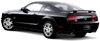
LEDs taillights do produce a brighter look and illuminate faster then standard bulbs. They also have the advantage of using less energy. I agree. If the lights are arranged in the proper way, LEDs can look great on the back of a car. BMW is doing great things with LEDs. The tail lights on the 2008 5 series look great.
Shelby GT500 Member
Joined: September 2, 2004
Posts: 2,594
Likes: 0
From: Chicago
FWIW I am not terribly impressed with HIDs. I read a Virginia Tech study that indicated regular Halogens allowed faster detection of objects in the road versus HIDs by about 300+ feet. The only things that performed better than halogen were thermal imaging and Halogen + UltraViolet lamps. Notwithstanding, HIDs are known to fail within 3-4 years depending on usage and they can get expensive to replace.
Legacy TMS Member
Joined: October 2, 2006
Posts: 4,777
Likes: 16
From: Southeast Michigan
