


2008 HID Headlight Picture

Mach 1 Member

Joined: May 7, 2007
Posts: 616
Likes: 0
From: New England
Sorry if this is a noob suggestion, but what if you just matched the color temperature on the fog lights? For example, if the HIDs are 6000K, get 6000K halogens for the fogs? They might not be the same brightness/focus, but at least they would all be the same color, which I think would look fine.

Team Mustang Source
Joined: January 29, 2004
Posts: 6,730
Likes: 3
You can get a single beam HID conversion for about $150 these days for the fogs. Personally I want the fogs to go away. I would imagine it would be 4300K which is pretty much standard for OEM cars. I wonder why they went with that bulky block setup when all other HID's on Ford products are just bulbs, albeit with a secondary halogen high-beam. Probably has something to do with a hi/low setup. I bet the faceted edge will get an even more halo-like effect with the Hides. It will surely be cool looking.
And the 350z and s2000 use a projector type bulb, but only have HID low beams with halogen highs.
And the 350z and s2000 use a projector type bulb, but only have HID low beams with halogen highs.

Legacy TMS Member
Joined: October 2, 2006
Posts: 4,777
Likes: 16
From: Southeast Michigan
The 2008 Mustang HID looks like a reflector setup, while the Europeans and Japanese setups use projectors which are significantly better in quality and precision (throwing the light where you want it).
FWIW I am not terribly impressed with HIDs. I read a Virginia Tech study that indicated regular Halogens allowed faster detection of objects in the road versus HIDs by about 300+ feet. The only things that performed better than halogen were thermal imaging and Halogen + UltraViolet lamps. Notwithstanding, HIDs are known to fail within 3-4 years depending on usage and they can get expensive to replace.
FWIW I am not terribly impressed with HIDs. I read a Virginia Tech study that indicated regular Halogens allowed faster detection of objects in the road versus HIDs by about 300+ feet. The only things that performed better than halogen were thermal imaging and Halogen + UltraViolet lamps. Notwithstanding, HIDs are known to fail within 3-4 years depending on usage and they can get expensive to replace.
Tasca Super Boss 429 Member
Joined: October 12, 2004
Posts: 3,751
Likes: 1
Thanks for the info. Maybe I'll save some money on those then. Might get the fan blade wheels instead? 
The 2008 Mustang HID looks like a reflector setup, while the Europeans and Japanese setups use projectors which are significantly better in quality and precision (throwing the light where you want it).
FWIW I am not terribly impressed with HIDs. I read a Virginia Tech study that indicated regular Halogens allowed faster detection of objects in the road versus HIDs by about 300+ feet. The only things that performed better than halogen were thermal imaging and Halogen + UltraViolet lamps. Notwithstanding, HIDs are known to fail within 3-4 years depending on usage and they can get expensive to replace.
FWIW I am not terribly impressed with HIDs. I read a Virginia Tech study that indicated regular Halogens allowed faster detection of objects in the road versus HIDs by about 300+ feet. The only things that performed better than halogen were thermal imaging and Halogen + UltraViolet lamps. Notwithstanding, HIDs are known to fail within 3-4 years depending on usage and they can get expensive to replace.
Legacy TMS Member
Joined: October 2, 2006
Posts: 4,777
Likes: 16
From: Southeast Michigan
The GTs have very bright driving/fog lights so you should be fine in the dark. The women won't care if you have HIDs with Xenon gas, but they will notice the shiny 18" wheels.

Cobra Member
Joined: August 19, 2004
Posts: 1,288
Likes: 0
The 2008 Mustang HID looks like a reflector setup, while the Europeans and Japanese setups use projectors which are significantly better in quality and precision (throwing the light where you want it).
FWIW I am not terribly impressed with HIDs. I read a Virginia Tech study that indicated regular Halogens allowed faster detection of objects in the road versus HIDs by about 300+ feet. The only things that performed better than halogen were thermal imaging and Halogen + UltraViolet lamps. Notwithstanding, HIDs are known to fail within 3-4 years depending on usage and they can get expensive to replace.
FWIW I am not terribly impressed with HIDs. I read a Virginia Tech study that indicated regular Halogens allowed faster detection of objects in the road versus HIDs by about 300+ feet. The only things that performed better than halogen were thermal imaging and Halogen + UltraViolet lamps. Notwithstanding, HIDs are known to fail within 3-4 years depending on usage and they can get expensive to replace.
perhaps it was PIAA's website.. But, I agree.... and I don't think it's worth the extra $$$. As cool as it looks... I'd rather have the functionality.

Bullitt Member
Joined: November 5, 2005
Posts: 327
Likes: 0
From: North Carolina
if you ever driven a car with them you will want them. They dont look bad at all, they look better than the saleen hid's. And they do have xenon gas. they use a d2r bulb which is made for a reflector.
Legacy TMS Member
Joined: November 13, 2005
Posts: 2,193
Likes: 46
Gotta throw in my $0.02...
I have both Saleen HIDs and foglight HID lights, and I must say that it made a WORLD of difference in improvement over the stock lighting.
IMO the stock setup was too weak. The whitish/bluish light illuminates road reflectors, signs, street paint, and other cars with TREMENDOUS clarity.
I would NEVER want to go back to stock halogen light again! Yes it was pricey ($1400 for the Saleens, plus another $210 for the fogs) but I think it was well worth the price at THAT rate, now that HID light is much cheaper I think it's a "no-brainer" mod that is totally worth the expense.
I have both Saleen HIDs and foglight HID lights, and I must say that it made a WORLD of difference in improvement over the stock lighting.
IMO the stock setup was too weak. The whitish/bluish light illuminates road reflectors, signs, street paint, and other cars with TREMENDOUS clarity.
I would NEVER want to go back to stock halogen light again! Yes it was pricey ($1400 for the Saleens, plus another $210 for the fogs) but I think it was well worth the price at THAT rate, now that HID light is much cheaper I think it's a "no-brainer" mod that is totally worth the expense.
Legacy TMS Member
Joined: October 2, 2006
Posts: 4,777
Likes: 16
From: Southeast Michigan
Again, Virginia Tech did a study on highway driving and found that Halogens actually worked better than HIDs on a closed highway "track" with real pedestrians and objects placed at certain distances. The problem is that most FMVSS compliant halogen lamp systems aren't optimized for maximum performance.
GT Member
Joined: October 18, 2004
Posts: 181
Likes: 0
I like that the HID's are finally hitting the mustang. But my only concern is that it's gonna look kinda stupid when the headlights are on along with the foglights.
I kinda like the all 4 halogen look when both heads and fogs are on, with the Xenon it's going to look kind of hokey IMO.
I kinda like the all 4 halogen look when both heads and fogs are on, with the Xenon it's going to look kind of hokey IMO.
GT Member
Joined: October 18, 2004
Posts: 181
Likes: 0
They should have gone with dual projector beam setup like this illustration in Motor Trend a few years back. Although I would have made the fogs larger to look more like the GT instead of the V6 Pony Package.

Legacy TMS Member
Joined: October 2, 2006
Posts: 4,777
Likes: 16
From: Southeast Michigan
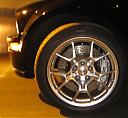
It's just my opinion, but the V6 Pony Package fogs should have been the stock fog lamps on the GT to give it that full retro look. However, I do not regret getting the much larger GT foglamps. They certainly make the GT look unique. Not many new production cars (if any) have that type of foglamp setup.
Legacy TMS Member
Joined: October 2, 2006
Posts: 4,777
Likes: 16
From: Southeast Michigan
Please refer to this PDF on page 60 (PDF page is #46) where they have a table of the results.
The gray "HLB" is the standard halogen setup. IR-TIS is the thermal imaging system, and the UVA stuff is just UV lights combined with the standard halogen.
Notice how HIDs are way down there with about 100 feet shorter recognition distances.
I used to think HIDs were the best, but after more research I tend to agree with the lighting experts that the color is what fools the eye into thinking it is better. There's no replacement for an efficient halogen setup considering the price of a replaceable halogen capsule is peanuts compared to a ballast or HID lamp capsule.
The gray "HLB" is the standard halogen setup. IR-TIS is the thermal imaging system, and the UVA stuff is just UV lights combined with the standard halogen.
Notice how HIDs are way down there with about 100 feet shorter recognition distances.
I used to think HIDs were the best, but after more research I tend to agree with the lighting experts that the color is what fools the eye into thinking it is better. There's no replacement for an efficient halogen setup considering the price of a replaceable halogen capsule is peanuts compared to a ballast or HID lamp capsule.

Team Mustang Source
Joined: January 29, 2004
Posts: 6,730
Likes: 3
There have been studies done on HIDs and so far the general consensus is that they glare other drivers, they put out a LOT Of light (which causes glare for you when it is foggy, rainy, dusty), and the only reason they seem to look brighter/make things look brighter is because of how the eye perceives white/blue light.
Again, Virginia Tech did a study on highway driving and found that Halogens actually worked better than HIDs on a closed highway "track" with real pedestrians and objects placed at certain distances. The problem is that most FMVSS compliant halogen lamp systems aren't optimized for maximum performance.
Again, Virginia Tech did a study on highway driving and found that Halogens actually worked better than HIDs on a closed highway "track" with real pedestrians and objects placed at certain distances. The problem is that most FMVSS compliant halogen lamp systems aren't optimized for maximum performance.
Legacy TMS Member
Joined: October 2, 2006
Posts: 4,777
Likes: 16
From: Southeast Michigan
I've driven everything, thousands and thousands of cars. Low beam HIDs are much better then halogen, but for high beams you can get more area lit with a halogen bulb. They also last plenty long. The VT study is just a bunch of kids doing it. There is no benefit to a projector over a reflector when both are properly designed unless they steer with the wheels.
The VT study is similar to some UofM studies. The VT study is interesting because they utilized a closed track with various "objects" and pedestrians simulating normal driving. Several Ph.Ds in the optics field also stated that the color temperature is what makes the HIDs "look" brighter because of how the human eye perceives white light (glare).
The amount of lumens from HIDs is COMPARABLE to halogens! I've seen figures ranging from 800-1500 lumens for halogens and 900-1000 lumens for HIDs. The only "benefit" I can see from HIDs over halogens is the lifespan. The manufacturers rate HIDs for 10 years / 100k miles but I've been told that they last only 2-5 years max by lighting professionals.
The benefit of a projector is more focused light that has a much sharper cut-off. The reflector system is very inefficient, especially a 7" round reflector. While the VOR cut-off is pretty decent on our Stangs, it's NOTHING compared to an efficient UNECE compliant cut-off found on a German or Japanese projector headlamp system.