


Spark Plug change needed for FI engines?


Thread Starter
I Have No Life

Joined: September 24, 2011
Posts: 10,141
Likes: 172
Spark Plug change needed for FI engines?
Weird question I know... but I just thought of this, as I prepare to add more power mods to her this week.
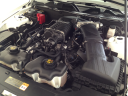
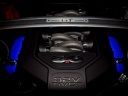
She has 8500 miles total, 1000 of those with a Maggie blower. She still has the OEM sparkplugs (I've never touched them).
Question is, is there a NEED to change them? If so, why? If so, what brand/type of plugs do I need?
I know that plugs get carbon build up over time, esp from Blowby, etc... I figured with me getting my Bob's today, I thought I'd start fresh, with a new set of plugs to go with the new separator. Unless it's overkill
thanks.
She has 8500 miles total, 1000 of those with a Maggie blower. She still has the OEM sparkplugs (I've never touched them).
Question is, is there a NEED to change them? If so, why? If so, what brand/type of plugs do I need?
I know that plugs get carbon build up over time, esp from Blowby, etc... I figured with me getting my Bob's today, I thought I'd start fresh, with a new set of plugs to go with the new separator. Unless it's overkill
thanks.

Thread Starter
I Have No Life
Joined: September 24, 2011
Posts: 10,141
Likes: 172
However, I do plan on calling them once they open today. I'll get it straight from the horse's mouth.
For those of you with blowers, did you replace your plugs? If so, why?
Thread Starter
I Have No Life
Joined: September 24, 2011
Posts: 10,141
Likes: 172
Mach 1 Member
Joined: March 27, 2014
Posts: 919
Likes: 0
From: Winnipeg, MB
As I've always understood it (I've had a couple of FI cars), a "colder" plug is a plug that pulls more heat out of the combustion chamber. In FI, going colder can get you a little more timing (or a slightly leaner mixture if you've got *****...I don't).
Spark blowout is really more connected to the gap. FI engines typically use a tighter gap on the plugs for that exact reason.
Spark blowout is really more connected to the gap. FI engines typically use a tighter gap on the plugs for that exact reason.
Mach 1 Member
Joined: March 27, 2014
Posts: 919
Likes: 0
From: Winnipeg, MB
Here's a good explanation of how heat ranges work...
http://www.ngk.com.au/spark-plugs/te...ge-explanation
http://www.ngk.com.au/spark-plugs/te...ge-explanation

V6 Member
Joined: November 6, 2013
Posts: 57
Likes: 0
From: Daytona Beach, FL USA
Here's a good explanation of how heat ranges work...
http://www.ngk.com.au/spark-plugs/te...ge-explanation
http://www.ngk.com.au/spark-plugs/te...ge-explanation
That is a great write up, thanks
Thread Starter
I Have No Life
Joined: September 24, 2011
Posts: 10,141
Likes: 172
I verified with JDM and a couple other tuner installation places, that whenever a Mustang or any other car gets supercharged, you will want to run a colder plug to avoid that nation at wide open throttle. Since more fuel is required with a supercharged set up, you will want to ensure that all the air and fuel gets burned up during the process.
JDM recommended the 1° colder ford racing plug – M50. I will go with that one. So the question is where would be the best place to get them?
JDM recommended the 1° colder ford racing plug – M50. I will go with that one. So the question is where would be the best place to get them?
Mach 1 Member
Joined: March 27, 2014
Posts: 919
Likes: 0
From: Winnipeg, MB
It's not the plug itself that's going to get you the complete burn, it's what the characteristics of the plug do in concert with the air, fuel, and timing.
Thread Starter
I Have No Life
Joined: September 24, 2011
Posts: 10,141
Likes: 172
This is a little oversimplified and backwards. If your timing is correct for the AFR you're targetting, you'll get complete burn. A colder plug will make sure A) enough heat gets pulled out to prevent pre-ignition/detonation and B) get a little more timing advance to ignite the mixture as close to TDC for maximum force on the power stroke without igniting early. It's not the plug itself that's going to get you the complete burn, it's what the characteristics of the plug do in concert with the air, fuel, and timing.
What brand/type of plug do you recommend for my set up? I've heard of NGK as well
Last edited by FromZto5; Jun 26, 2014 at 11:46 AM.
Thread Starter
I Have No Life
Joined: September 24, 2011
Posts: 10,141
Likes: 172
After conversing more with tuners, etc... they recommend the Ford Racing plugs over anything else. It's proven, works, and they use it for their installs and custom tunes.
So with that, plugs are ordered and should be here early next week.
This is going to be essential for my setup, esp now that I will be pushing more boost (10psi) and more power.
So with that, plugs are ordered and should be here early next week.
This is going to be essential for my setup, esp now that I will be pushing more boost (10psi) and more power.

Mach 1 Member
Joined: May 11, 2012
Posts: 610
Likes: 21
From: Belle Plaine, MN
In a digitally controlled engine, if you’re running pump gasoline hopefully you aimed for a stoichiometric range of 10.5:1 (Best power) up to about 17:1 (Very lean cruise) with best heat at 14.7. Maximum allowable ignition timing algorithms will depend on: Load/RPM/throttle position (Which equals cylinder pressure), engine temp, intake charge temp, fuel octane, altitude/density. As the computer juggles these inputs and variables it attempts to select the most advanced timing and leanest mixture possible. In simple carbureted engines you’re shooting for the same stoichs (Minus the extreme lean cruise) but things are much less sophisticated in that you basically have four circuits in the carb: idle, mid, main, (which includes a power enrichment valve) and accelerator. No fancy tables, just jet it and set it as close as possible and go. Same thing for the timing: set static timing as advanced as possible and that’s what you get (50 degrees BTDC not unheard of). Street cars of the era equipped with a basic as a hammer magneto or Kettering or electronic ignition also had fly weights and a vacuum “Motor” to advance and retard the timing based on engine speed and load). All that said, in some large bore, long stroke engines, getting a good complete burn isn’t possible even with everything being right on. Two plugs per hole are required. Typically the “Intake” plug fires several degrees prior to the “Exhaust” plug. This creates two flame fronts and is very effective at attaining a complete burn.
Plug heat range is selected based largely on the variables above. A colder plug is exactly what it says: it runs colder. It rejects its heat load to the cylinder head quicker, more effectively because it’s center electrode is shorter and the steel body contacts the ceramic over a larger area. Essentially you want as cold a plug as possible with the low limit being it can’t foul (Carbon or oil) during cooler operation. A higher heat range plug will have a longer center electrode and the steel body will have less contact with ceramic. Heat ranges too high for the application and the center electrode begins to act like a glow plug causing pre-ignition and detonation, neither of which is good! The type of plug and its materials of construction are subjective based on personal preference and need. Steel electrodes work fine but wear/erode faster than platinum. How often do you want to fool with maintaining spark plugs? I’ve played with standard single ground plugs, “Y” plugs, dual fine wire platinum’s, dual heavy steels. Some will claim power gains, I never saw any. Reliability and smoother running definitely went to the fine wire platinum plugs but required a bank loan to buy and are not widely available. I think the best bang for the buck right now is a standard platinum plug made by whatever plug manufacturer you like best.
John
Plug heat range is selected based largely on the variables above. A colder plug is exactly what it says: it runs colder. It rejects its heat load to the cylinder head quicker, more effectively because it’s center electrode is shorter and the steel body contacts the ceramic over a larger area. Essentially you want as cold a plug as possible with the low limit being it can’t foul (Carbon or oil) during cooler operation. A higher heat range plug will have a longer center electrode and the steel body will have less contact with ceramic. Heat ranges too high for the application and the center electrode begins to act like a glow plug causing pre-ignition and detonation, neither of which is good! The type of plug and its materials of construction are subjective based on personal preference and need. Steel electrodes work fine but wear/erode faster than platinum. How often do you want to fool with maintaining spark plugs? I’ve played with standard single ground plugs, “Y” plugs, dual fine wire platinum’s, dual heavy steels. Some will claim power gains, I never saw any. Reliability and smoother running definitely went to the fine wire platinum plugs but required a bank loan to buy and are not widely available. I think the best bang for the buck right now is a standard platinum plug made by whatever plug manufacturer you like best.
John
Mach 1 Member
Joined: March 27, 2014
Posts: 919
Likes: 0
From: Winnipeg, MB
That said, in several applications I've had trouble with both Bosch (particularly their +4 gimmick) and Champion.

Bullitt Member
Joined: March 27, 2012
Posts: 402
Likes: 1
From: Nevada
My Roush phase 1 blower kit required non-stock spark plugs. Roush supplied the Ford CYFS12YP spark plugs which called for a 0.9mm gap.
Last edited by silverstate777; Jun 26, 2014 at 04:50 PM. Reason: typo

Thread
Thread Starter
Forum
Replies
Last Post
STOERKEL
SN95 Mustang
3
Sep 11, 2015 11:38 AM