
Why the Mustang GT3’s Subtle ‘Evo’ Revisions Are Actually Game-Changing
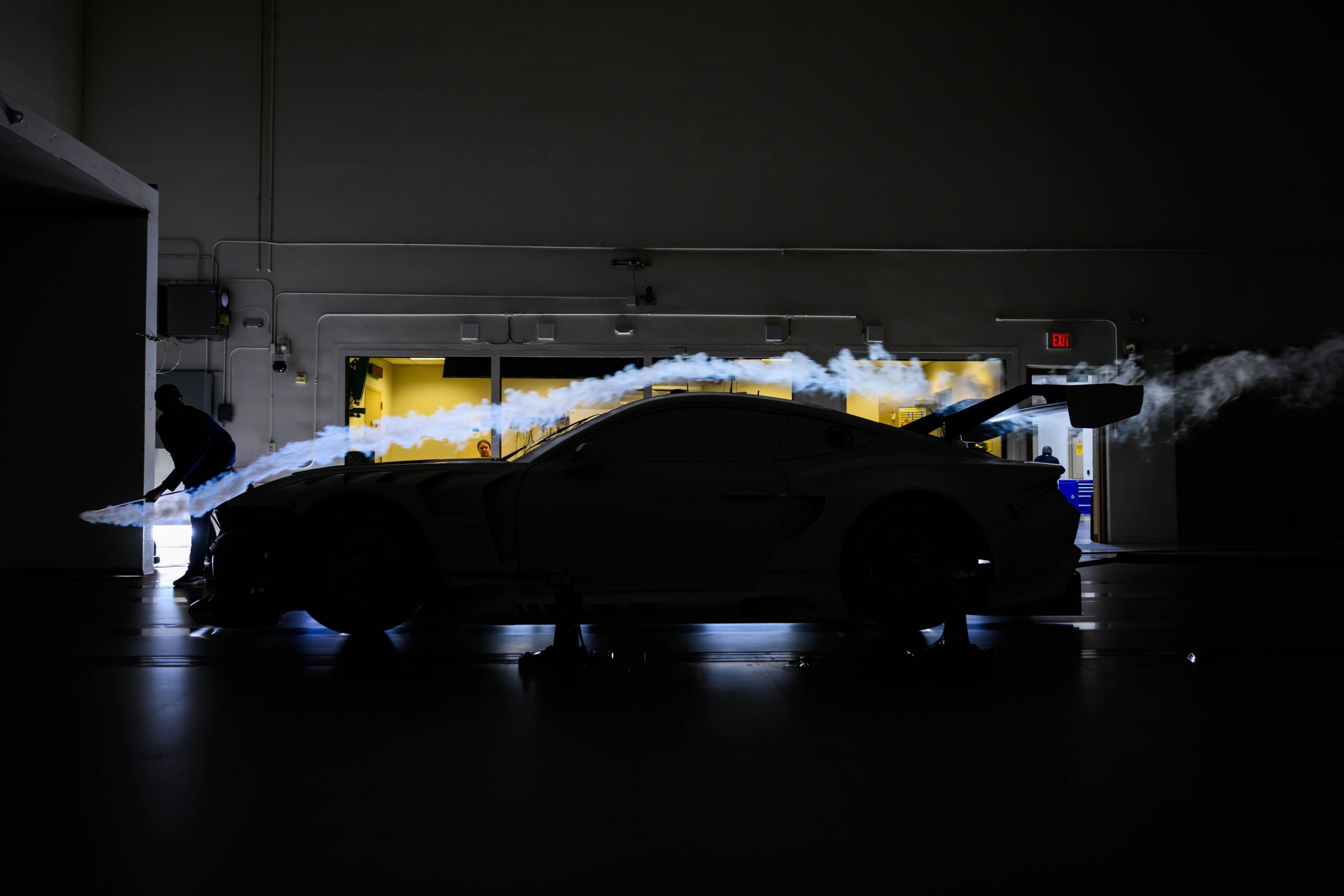
Instead of an overhaul, Ford used key learnings across every Mustang GT3 program in years past to make small but huge refinements.
Ford Performance has spent the last two years gathering data from every corner of the globe to give the Mustang GT3 a surgical “Evo” update.
And while it may look like the same pony to the naked eye, there are actually some pretty interesting refinements under the skin. Basically, Ford is turning an already-successful platform into a more refined, predictable, and “lethal weapon” for the 2026 race season and beyond.
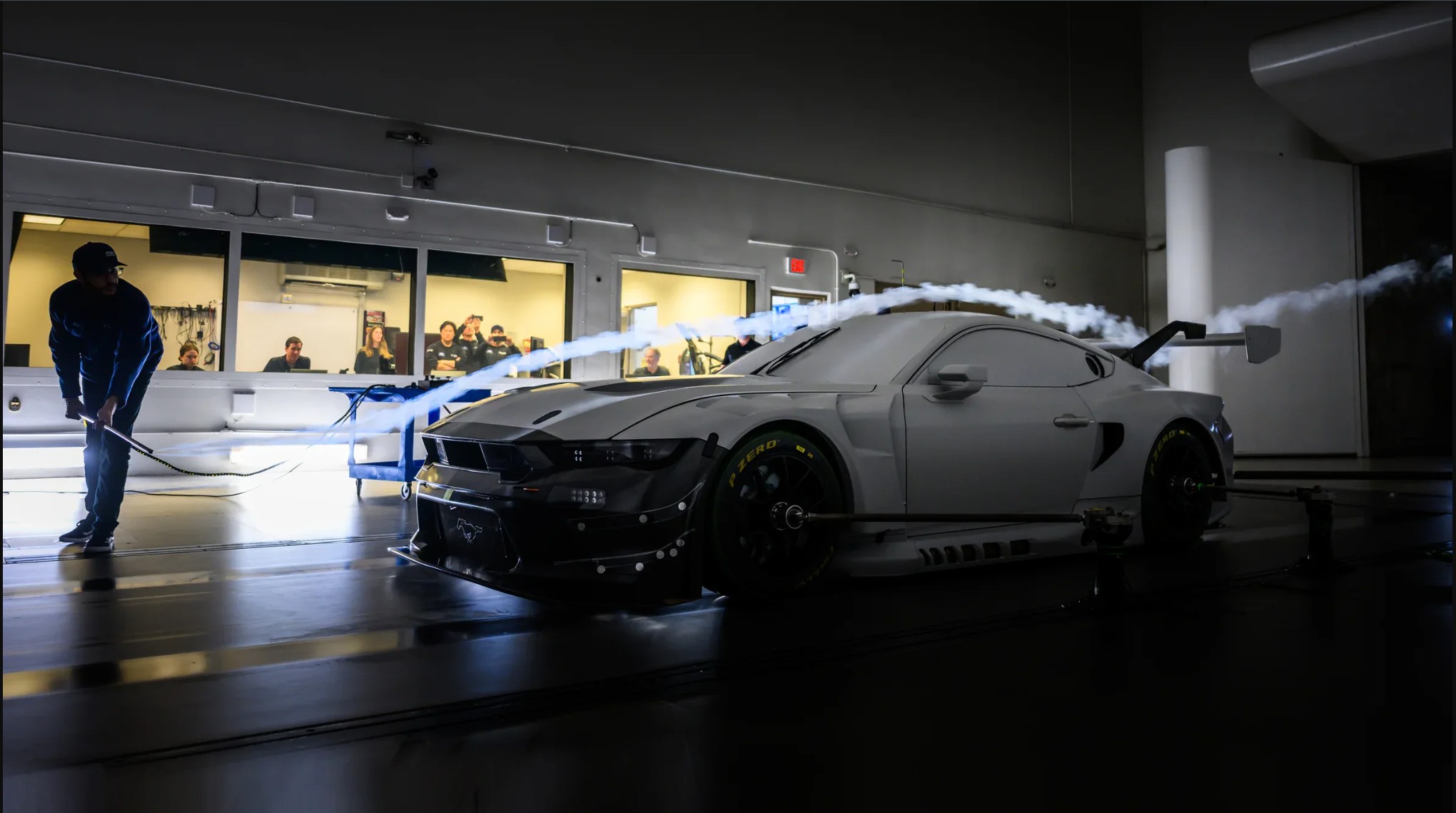
Aerodynamics: Keeping the Pony Planted
The most conspicuous change to the 2025 spec is the addition of aggressive double-dive planes on the front fascia. On paper, it sounds like a minor tweak, but in the world of GT3 racing, it’s a total shift in philosophy. They, along with a revised splitter and rear diffuser, create an overwhelmingly stable aero model.
By making the car less sensitive to changes in ride height, Ford has improved “drivability,” which is a massive win for customer teams. Whether you’re a pro or a “Bronze” rated gentleman driver, the car now behaves WAY more consistently whether you’re diving into a hairpin at Laguna Seca or screaming down the Mulsanne Straight.

Mastering the Contact Patch
Logically, you can’t change the aero without changing the bones of the car. So, Ford’s engineers updated the Mustang GT3’s kinematics—specifically the front and rear suspension geometry—to work in harmony with the heavier downforce levels.
By fine-tuning anti-dive and camber gain, the car can now more carefully use use the unique properties of the various tire compounds used in series like IMSA and SRO.
While still acheiveing max life and grip, that is.
It isn’t just about raw lap times, either. Ford is really focusing on endurance, and for good reason. A more stable suspension platform means the tires stay in their “sweet spot” longer, which is the difference between winning a sprint in Detroit or surviving 24 hours at the Nürburgring. Now, you don’t have to pick and choose your battles.
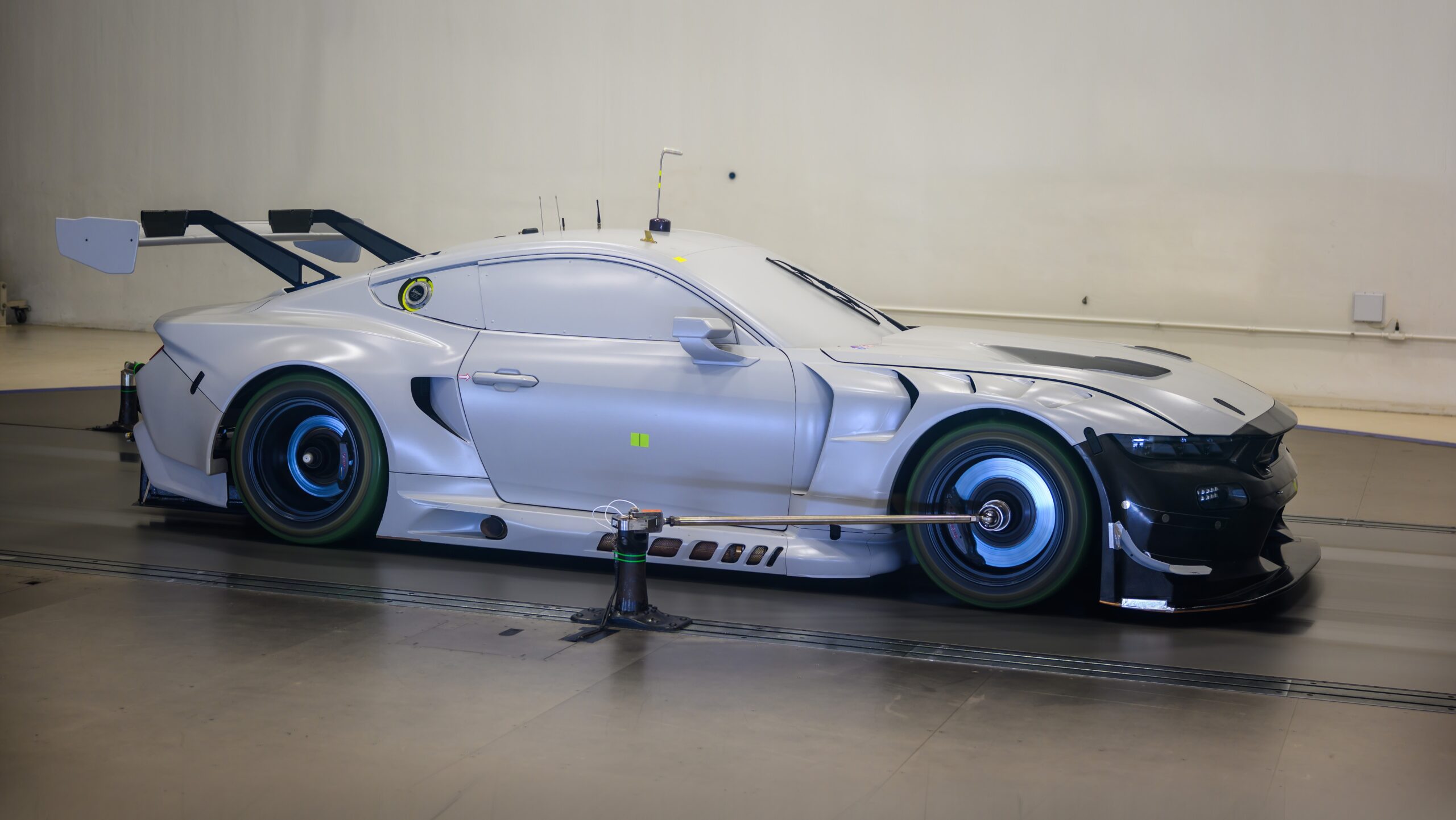
Sticking with Brembo Brakes
Reliability is the name of the game in endurance racing, and Ford is naturally doubling down on its partnership with Brembo. They’ve aligned the GT3’s hardware more closely with the Mustang Dark Horse and GT4 models.
Mind you, these updates aren’t just for show. In testing, the new Brembo setup has shown the kind of durability required to defend class victories at the world’s most grueling tracks (ViR, Spa-Francorchamps, Suzuka Circuit, etc). When you’re standing on the anchors at the end of a long straight, you need to know the car is going to stop every single time, and this evolution ensures the Mustang GT3 remains the benchmark for stopping power.
Mustang GT3
The 2024 season was a massive “learning year” that yielded 14 global wins, but Ford isn’t resting on its laurels. These 2025 refinements are the result of thousands of miles logged at tracks like Sebring and Portimão.
By focusing on data-driven refinements rather than a total revamp, Ford has respected the Mustang’s 60-year racing heritage while sharpening it into a global elite competitor. Heading into the 2026 season, Ford is determined to be the dominant force on- and off-track.
Photos: Ford
Join the Mustang Source Forums now!

You must be logged in to post a comment.