
Hold Onto Your Hats. Ford is Back in Formula 1!
Red Bull Has Large Ford Boots to Fill. Here’s the Oval’s F1 History
The third most successful engine manufacturer in Formula 1 history with 176 wins behind Ferrari on 250 and Mercedes’ 239 at the end of 2025. Ford also powered to no less then thirteen World Drivers and ten World Constructor’s Championships in its 37 years of competition. And now the Blue Oval is back.
Ironically it’s Red Bull and its offshoot Racing Bulls that will take Ford back to Formula 1 this year. The fledgling Red Bull team indeed acquired its operation lock, stock and barrel from Ford in 2005. And Sebastian Vettel, Max Verstappen, eight Drivers’ and six Constructors’ Championships later, it’s history. But what about Ford’s Formula 1 history?
Although its engines started seven races before 1966, Ford officially entered Formula 1 an engine supplier through its partnership with Cosworth in 1967. Established by Lotus employees Mike Costin and Keith Duckworth in 1958, ‘Cos’ and ‘Worth’ initially worked building Climax race engines. Engine development projects followed the road-going Elan and Lotus 15 through 26 race cars, Lotus Cortina mills and more.

Costin and Duckworth Made up Cosworth
Cosworth-designed Lotus cylinder heads soon became all the rage, culminating with the 1966 gear-driven double overhead camshaft four-valve FVA. The rights to which design Lotus boss Colin Chapman convinced Ford to acquire. Among the designs acquired was the DFV. A Cosworth V8, essentially a couple of FVAs joined at the hip in a 90-degree 3-litre V8.
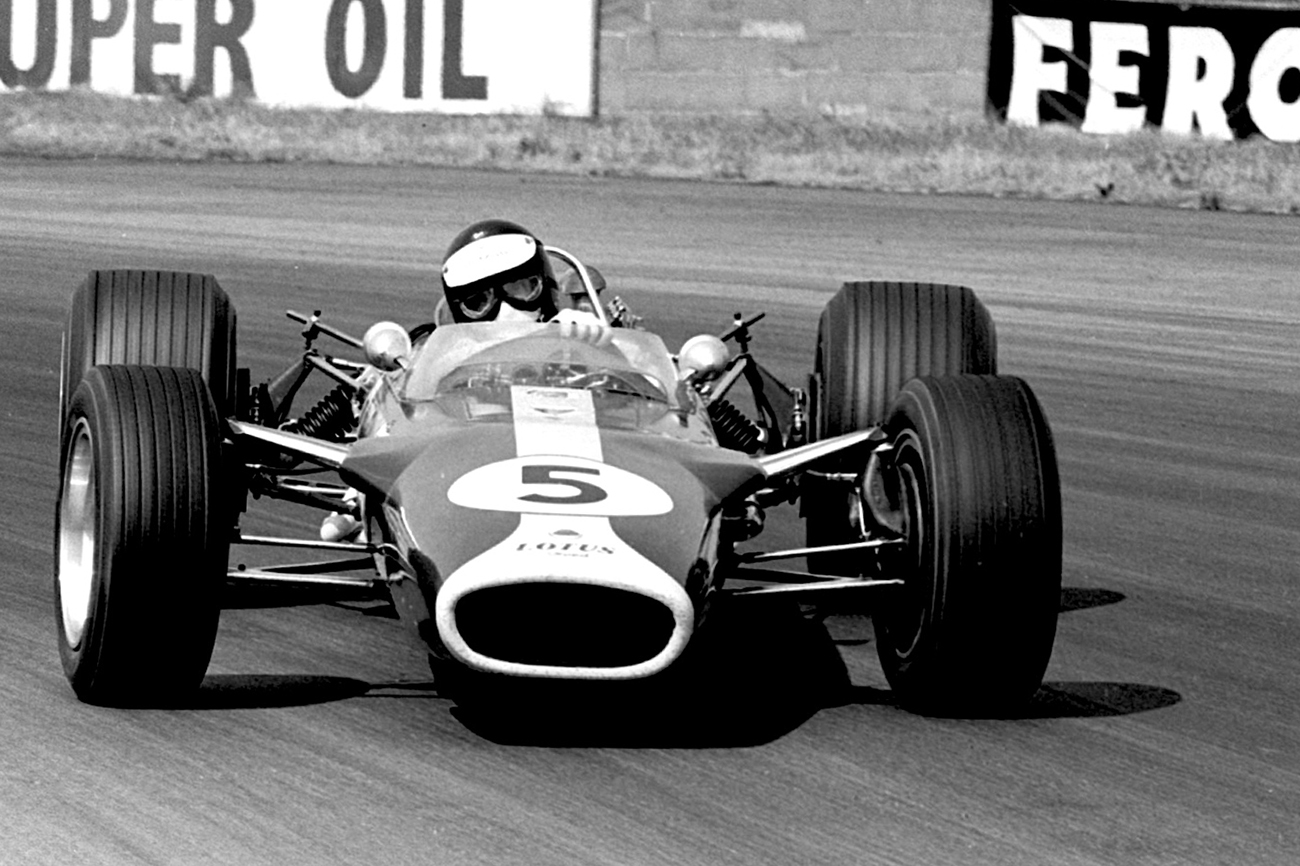
Lotus initially held sole rights to the new Ford Cosworth DFV which replaced the team’s previous recalcitrant and unreliable BRM W16 engines. Unveiled in April 1967 and introduced just 2 months later in the back of the all-new Lotus 49 at the Dutch Grand Prix, the all-new Ford Cosworth DFV demolished the opposition. Jim Clark power-slid to a sensational debut victory at Zandvoort (top) as the DFV began rewriting Formula 1 history.
Clark won three more races in ’67 before another, his final victory before his tragic and untimely death in 1968. But teammate Graham Hill went on to become ‘68 Drivers’ and Lotus-Ford Constructors’ Champions. Lotus no longer enjoyed exclusive rights to the Ford Cosworth DFV from 1968 as the engine dominated to win eleven of the twelve races. Jackie Stewart’s Matra, Denny Hulme and Bruce McLaren’s McLarens and Jo Siffert’s privateer Rob Walker Lotus among them.

DFV Remains Formula 1’s Most Successful Race Engine
The most successful F1 race engine of all time, the Ford Cosworth DFV soon became the backbone of Formula 1. It powered the majority of the grid. The ‘garagisti’ as Enzo Ferrari called them, privateers cobbled decent chassis together, bolted a DFV and a Hewland gearbox to the back and went racing. And winning against the ‘grandees’, Ferrari, Renault and Alfa Romeo among them.
Consistently upgraded, the DFV went on to win 155 Grands Prix, twelve Drivers’ Championships and ten Constructors’ titles. Lotus, Matra, Tyrrell, McLaren, Williams and Brabham were all World Champions with the DFV. And the Ford-Cosworth V8 powered Graham Hill, Jackie Stewart, Jochen Rindt, Emerson Fittipaldi, James Hunt, Mario Andretti, Alan Jones, Nelson Piquet and Keke Rosberg to their Drivers’ titles.
Michele Alboreto (above) took the DFV’ final F1 win for Tyrrell in Detroit Grand Prix in 1983. Martin Brundle was last to race a DFV in F1 at the Tyrrell at the 1985 Austrian Grand Prix. Ford-Cosworth continued to supply DFVs well into the turbo era and new naturally aspirated Formula 1 V8 engines beyond that too.
Cosworth DFX. The Second Coming
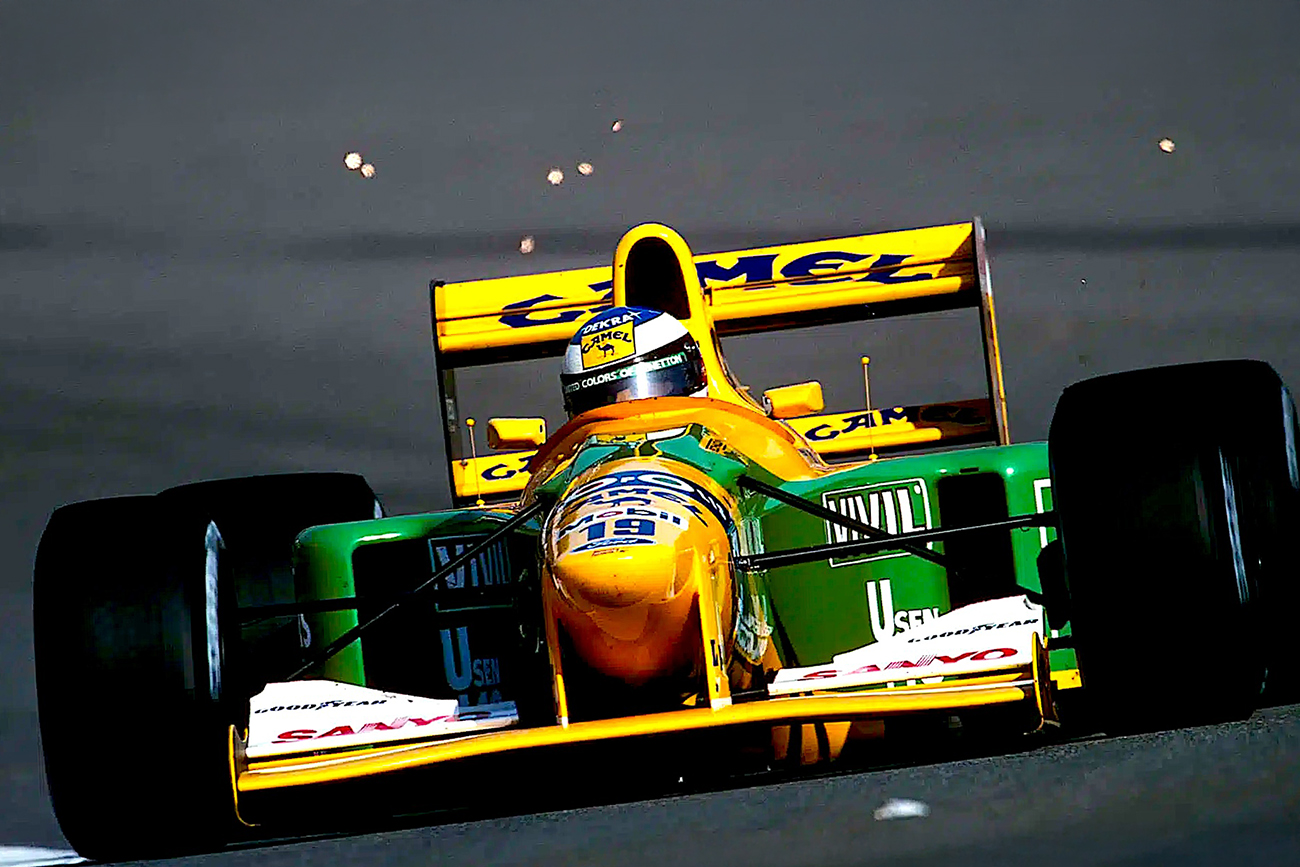
While Ford did build the 1.5-litre V6 Cosworth GBA turbo engine, it met with little success. But 1989 saw a return to naturally aspirated engines and a new 3.5-litre Ford-Cosworth DFZ V8 engine for Tyrrell, Benetton and others. Alessandro Nannini won a controversial Japanese Grand Prix for Ford, before Nelson Piquet won twice in 1990 and once again in ’91.
Michael Schumacher took his first win for Benetton-Ford in Belgium in 1992. Despite powerful V10 and V12 competition Ayrton Senna’s McLaren and Schumacher’s Benetton won six races in 1993. Senna ended second and Schumacher third in the championship with their teams also second and third.
Schumacher then went on to win eight races en route to the World Drivers’ Championship (above) in sad 1994. A few lean seasons followed, intriguingly with Jos Verstappen’s Simtek Ford and Red Bull sponsored fledgling Sauber Ford in ’95, and Sauber Minardi and Forti in 1996.

Ford Cosworth Raced Formula 1 Until 2004
In 1997, Ford ran Jackie’s new Stewart Grand Prix as a works team alongside supply deals for Tyrrell and Minardi. The Motor Company then acquired full control of the Cosworth race engine division in 1998 before Johnny Herbert took Stewart’s only victory at the 1999 European Grand Prix.
Ford then rebranded Stewart to Jaguar, which failed to win. Although the V8 did power Giancarlo Fisichella’s Jordan (above) to Ford’s most recent Grand Prix victory in the 2003 Brazilian Grand Prix. After another trying season in 2004, Ford sold the Jaguar team to newcomers Red Bull and quit Formula 1.
Ford has remained absent from Formula 1 for 21 years. But that’s all about to change. Like it did with Cosworth in 1967, Ford in February 2023 announced its collaboration with Red Bull Powertrains as power unit partner from the 2026 season. The move coincidies with new regulations focused on sustainable fuels and more electrification and the new cars have already hit the track.
A New Beginning With Red Bull Racing
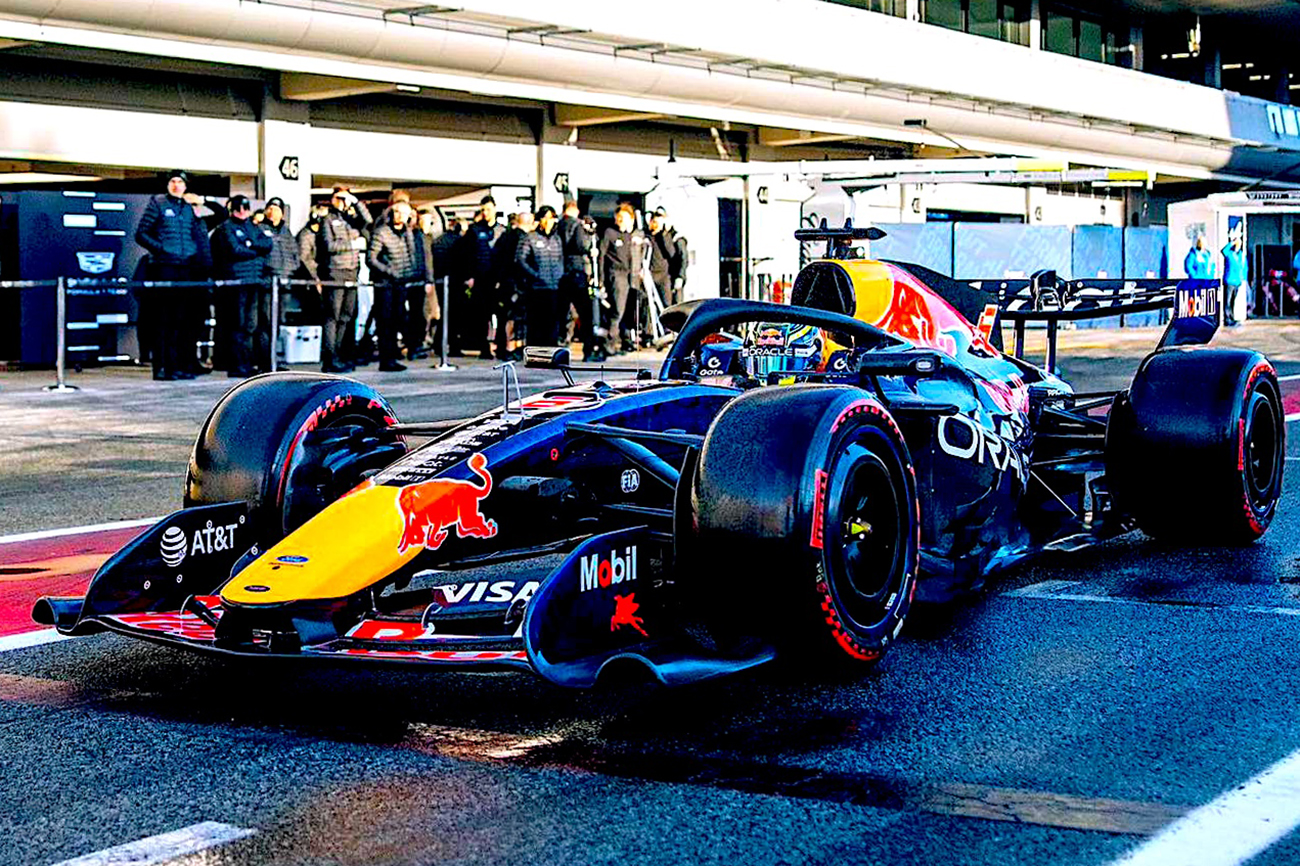
Spearheaded by Dutch four-time world champion, Jos’ son Max Verstappen and Frenchman Isak Hadjar driving the new Red Bull RB22 Ford (above) backed by Racing Bulls 03 Ford duo, Kiwi Liam Lawson and English rookie Arvin Lindblad, Ford will be back in Formula 1 from 2026. Will the Red Bull Ford DM01 prove as effective in Verstappen’s hands as the Ford-Cosworth DFV did in Clark’s, and the rest after him?
Time will tell. But Ford is once again lighting up Formula 1 at this week’s pre-season test and will continue to do so circuits around the world. Starting at the Australian Grand Prix at Melbourne, Sunday 8 March. Don’t miss it!
Images: Ford/Formula 1
You must be logged in to post a comment.