


Sandy built up in coolant reservoir.


Thread Starter
V6 Member
Joined: June 3, 2013
Posts: 65
Likes: 0
From: Elizabeth City, NC
Sandy built up in coolant reservoir.
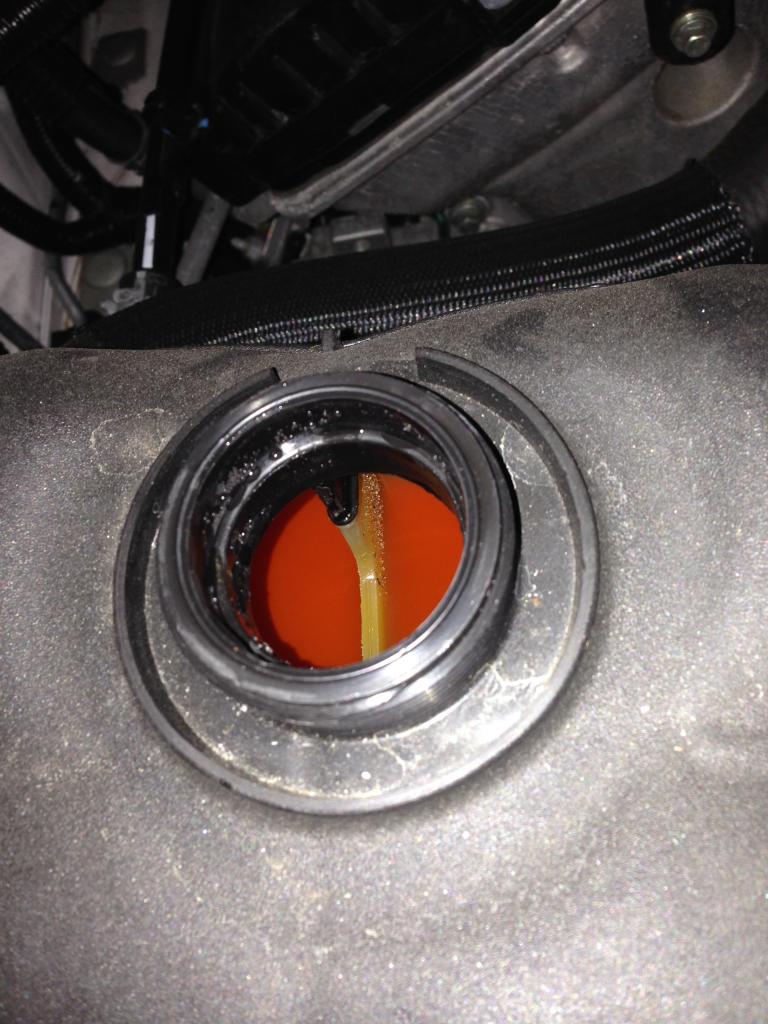
My car currently has 17,000 miles on it, from the very beginning it had this built up of something inside the coolant reservoir along the edge of the coolant, don't know what the stuff is but it feels like sand and dirt. Normal or not normal? I've yet to see the same thing in other vehicles (I work at a quick lube shop so I see a lot cars)
Anyone else have this same little issue?
This is the best picture I could get of it.
Anyone else have this same little issue?
This is the best picture I could get of it.

Mach 1 Member

Joined: December 13, 2012
Posts: 599
Likes: 0
mine had that stuff 2. there was a good bit in the bottom of it when i drained the reservoir to change the water pump. not really sure what it is but i looked at one new on the lot at the dealership and it had it too so i figured it was normal.
Thread Starter
V6 Member
Joined: June 3, 2013
Posts: 65
Likes: 0
From: Elizabeth City, NC
So it's normal after all, it seems. Good to know, I was thinking of taking it to the dealer soon to have it looked at but it'd probably be a waste of time. The car still runs as it should so I won't fret over it until it's time to change the coolant.

Mach 1 Member
Joined: December 13, 2012
Posts: 599
Likes: 0

Mach 1 Member
Joined: March 18, 2013
Posts: 537
Likes: 13
From: Lincoln, NE
Could be totally wrong but to reduce Warranty claims lots of Manufactures do this. Chevrolet had a TSB back in the day to add Stop Leak tabs to the cooling system when the Intake started leaking...




A Man Just Needs Some....
Joined: April 9, 2011
Posts: 17,125
Likes: 34
From: Louisiana
Minerals from the water used in it. It cooks out of the water and leaves a crust. If you top off your coolant system with hard tap water you will get this. Always try and use deionized water in your coolant system. It's cheap and will keep your coolant system in better shape.
Mach 1 Member
Joined: December 13, 2012
Posts: 599
Likes: 0
yep that was the symptom when my water pump went out. i didnt notice any other symptoms but i lifted up my car and under it was damp and it was coolant. i figured out it was the pump by putting dye in it and sure enough it was coming from behind the pulley on the water pump. luckly it only takes about a hour to replace the water pump on these cars well at least thats all it took on my 3.7.

NOT CURRENTLY ACTIVE ON THIS SITE! DO NOT USE PM FEATURE!
Joined: October 25, 2010
Posts: 5,279
Likes: 16
From: Dearborn, MI
My car currently has 17,000 miles on it, from the very beginning it had this built up of something inside the coolant reservoir along the edge of the coolant, don't know what the stuff is but it feels like sand and dirt. Normal or not normal? I've yet to see the same thing in other vehicles (I work at a quick lube shop so I see a lot cars)
Anyone else have this same little issue?
This is the best picture I could get of it.
Anyone else have this same little issue?
This is the best picture I could get of it.
Deysha


Mach 1 Member
Joined: May 11, 2012
Posts: 610
Likes: 21
From: Belle Plaine, MN
Minerals from the water used in it. It cooks out of the water and leaves a crust. If you top off your coolant system with hard tap water you will get this. Always try and use deionized water in your coolant system. It's cheap and will keep your coolant system in better shape.
John

Post *****
Joined: December 14, 2007
Posts: 19,953
Likes: 4
From: State of Jefferson Mountains USA
It’s best not use deionized water in a cooling system. Because it’s devoid of anything but hydrogen and oxygen it is very hungry (Corrosive) and will actively pick up ions from the metals (Corrodes them) until it’s reionized (Neutralized). Tap water with a high mineral content should be avoided as well. Distilled water is the best choice.
John
John
Shelby GT500 Member
Joined: December 20, 2011
Posts: 4,326
Likes: 53
From: CenTex...sort of
To add to this discussion, pure water is pH-neutral: 7.0. It's virtually impossible to reach that pH, and most water is slightly acidic (<7.0). Deionized water isn't "hungry." It's relatively inert, which is why it's so stable around most elements/compounds. Deionized water has the ions removed from it, which are mostly the calcium, potassium and iron ions people have in their regular tap water. It's not going to hurt the interior of your cooling system any more than distilled water will, and it won't prevent the water molecules from interacting with the iron in the cooling system, either. The coolants that are used along with the water have additives that help protect against corrosion; excessively hard water is really the only water that can cause problems, and it's the build-up that's been seen in the tanks that is the result.
A Man Just Needs Some....
Joined: April 9, 2011
Posts: 17,125
Likes: 34
From: Louisiana
To add to this discussion, pure water is pH-neutral: 7.0. It's virtually impossible to reach that pH, and most water is slightly acidic (<7.0). Deionized water isn't "hungry." It's relatively inert, which is why it's so stable around most elements/compounds. Deionized water has the ions removed from it, which are mostly the calcium, potassium and iron ions people have in their regular tap water. It's not going to hurt the interior of your cooling system any more than distilled water will, and it won't prevent the water molecules from interacting with the iron in the cooling system, either. The coolants that are used along with the water have additives that help protect against corrosion; excessively hard water is really the only water that can cause problems, and it's the build-up that's been seen in the tanks that is the result.
We deionize water here at work. Just a process of stripping minerals from the water. Primarily sodium, silica, and iron. Deionized with a 7 ph is neutral and pure. 50/50 mix with antifreeze so it's not pure anymore anyways. Distilled water will be fine in a cars cooling system and much better than tap water. Just the purer the better.
Post *****
Joined: December 14, 2007
Posts: 19,953
Likes: 4
From: State of Jefferson Mountains USA
This^^^
We deionize water here at work. Just a process of stripping minerals from the water. Primarily sodium, silica, and iron. Deionized with a 7 ph is neutral and pure. 50/50 mix with antifreeze so it's not pure anymore anyways. Distilled water will be fine in a cars cooling system and much better than tap water. Just the purer the better.
We deionize water here at work. Just a process of stripping minerals from the water. Primarily sodium, silica, and iron. Deionized with a 7 ph is neutral and pure. 50/50 mix with antifreeze so it's not pure anymore anyways. Distilled water will be fine in a cars cooling system and much better than tap water. Just the purer the better.