


Is Direct Injection still coming? Is anyone holding out?

Thread Starter
Shelby GT350 Member

Joined: May 18, 2010
Posts: 2,318
Likes: 15
From: CT
Is Direct Injection still coming? Is anyone holding out?
Early on, someone spotted a spot in the head casting of the 5.0 that looked to be a provision for direct injection...and the speculation began immediately.
The inevitable performance and economy boost will probably make us new 5.0 owners a bit envious.
So...has there been anything new about possible DI for the 5.0? Is anyone holding out for this upgrade?
The inevitable performance and economy boost will probably make us new 5.0 owners a bit envious.
So...has there been anything new about possible DI for the 5.0? Is anyone holding out for this upgrade?

Thread Starter
Shelby GT350 Member
Joined: May 18, 2010
Posts: 2,318
Likes: 15
From: CT
Why do you think so? DI typically offers significant improvements in power and fuel mileage...if the IC engine survives into the next generation of cars, it's hard to imagine that DI wouldn't be on every single one of them.


GTR Member
Joined: September 28, 2009
Posts: 6,284
Likes: 1
I don't think we'll see it until 2015MY at the earliest. I remember reading the detailed release and the engineers said the cost wasn't adding enough in return to justify. That may change in a few years.

Mach 1 Member
Joined: April 22, 2010
Posts: 903
Likes: 0
Yup. The Coyote 5.0 was designed to be highly upgradable so that Ford could use it for a long time without having to develop a completely new engine. It has provision for Direct Injection but again, probably won't be used on a Mustang until 2015MY like Overboost suggests. At present there isn't much incentive for them to add it, but new fuel economy legislation may help convince Ford to add it at some point just to raise the fuel economy on their overall fleet or if they start losing customers just because it doesn't have DI.
I wonder though if they might install it on the Boss before introducing it to the GT though. The cost for performance would easily be justified, and I have a feeling the vast majority of potential Boss customers could be told "Direct Injection" and have it carry real weight and meaning.
I wonder though if they might install it on the Boss before introducing it to the GT though. The cost for performance would easily be justified, and I have a feeling the vast majority of potential Boss customers could be told "Direct Injection" and have it carry real weight and meaning.
Last edited by Lancel; Jan 28, 2011 at 11:02 AM.
Legacy TMS Member
Joined: February 8, 2004
Posts: 3,399
Likes: 7
From: Cincinnati, OH
I wonder though if they might install it on the Boss before introducing it to the GT though. The cost for performance would easily be justified, and I have a feeling the vast majority of potential Boss customers could be told "Direct Injection" and have it carry real weight and meaning.



Needs to be more Astony
Joined: October 4, 2004
Posts: 8,610
Likes: 5
From: Volo, IL
The 2012 focus now has direct injection and 12:1 compression.
The Mustang doesn't need direct injection, it already is faster and has better fuel economy then its competitors. The added cost would not be nessessary since it won't be winning any extra sales being that its already better.
The Mustang doesn't need direct injection, it already is faster and has better fuel economy then its competitors. The added cost would not be nessessary since it won't be winning any extra sales being that its already better.

Post *****
Joined: December 14, 2007
Posts: 19,953
Likes: 4
From: State of Jefferson Mountains USA
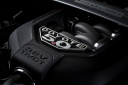
Perhaps the final major head-design challenge was packaging everything into the downsized Coyote head. This was only slightly complicated by leaving room for an EcoBoost fuel injector. Its path low on the intake side was protected during Coyote development in case Ford decides to fit the somewhat bulky direct injection injector to the 5.0-liter in the future.
Direct Performance
Some may wonder why the Coyote is not debuting with EcoBoost, Ford's combination of direct fuel injection and turbos. It's a fair question, but after driving EcoBoost in everything Ford puts it in, we're not missing it on the Coyote.
EcoBoost is efficient, torquey, somewhat revvable, and expensive. For a performance car, its personality is a hint cool, without an exhaust snarl or light-speed snappiness. In fact, after 25 years of driving performance cars, we're convinced there is nothing better than a crisp 400-500hp, naturally aspirated small-block when it comes to driving fun. The Coyote comes awfully close to perfection on paper, so we're really looking forward to driving it.
For the Coyote team, Mike Harrison expresses the inevitable concern. "I'm personally worried that when it launches people will think, 'Oh, doesn't it have DI on it? You know, it's not relevant.' I'm a bit worried about that, but I hope the metrics will speak for themselves, because we're delivering DI-like performance. We're trying to leave the impression it is fully competitive without it."
A big reason Mike isn't too concerned is the Coyote has garnered much of EcoBoost's advantages without the cost.
As a Coyote team engineer put it, "On a naturally-aspirated engine, the biggest benefit of DI is charge cooling-and it's a volumetric efficiency benefit and not a tolerance benefit. We squirt the injectors while the [intake] valve is open, and it's open a long time, which we haven't done before. It seems simple and gets you half the benefit of DI-for no costs at all."
The only apparent downside is cylinder-wall washing at low engine speeds, so the injector is limited to closed-valve periods at low rpm. Also, the camshafts change valve timing, so that's something else to synchronize with the injector in the engine management calibration.
http://www.mustang50magazine.com/tec...rformance.html
Direct Performance
Some may wonder why the Coyote is not debuting with EcoBoost, Ford's combination of direct fuel injection and turbos. It's a fair question, but after driving EcoBoost in everything Ford puts it in, we're not missing it on the Coyote.
EcoBoost is efficient, torquey, somewhat revvable, and expensive. For a performance car, its personality is a hint cool, without an exhaust snarl or light-speed snappiness. In fact, after 25 years of driving performance cars, we're convinced there is nothing better than a crisp 400-500hp, naturally aspirated small-block when it comes to driving fun. The Coyote comes awfully close to perfection on paper, so we're really looking forward to driving it.
For the Coyote team, Mike Harrison expresses the inevitable concern. "I'm personally worried that when it launches people will think, 'Oh, doesn't it have DI on it? You know, it's not relevant.' I'm a bit worried about that, but I hope the metrics will speak for themselves, because we're delivering DI-like performance. We're trying to leave the impression it is fully competitive without it."
A big reason Mike isn't too concerned is the Coyote has garnered much of EcoBoost's advantages without the cost.
As a Coyote team engineer put it, "On a naturally-aspirated engine, the biggest benefit of DI is charge cooling-and it's a volumetric efficiency benefit and not a tolerance benefit. We squirt the injectors while the [intake] valve is open, and it's open a long time, which we haven't done before. It seems simple and gets you half the benefit of DI-for no costs at all."
The only apparent downside is cylinder-wall washing at low engine speeds, so the injector is limited to closed-valve periods at low rpm. Also, the camshafts change valve timing, so that's something else to synchronize with the injector in the engine management calibration.
http://www.mustang50magazine.com/tec...rformance.html
Last edited by cdynaco; Jan 28, 2011 at 01:41 PM.
MOTM Committee Member
Joined: April 17, 2006
Posts: 9,201
Likes: 2
From: SoCal
I'm just saying if someone were holding out for the sole purpose of waiting on DI it wouldn't be worth it. The performance and efficiency bump would not be worth waiting a few more years if that's the only thing holding one back
legacy Tms Member MEMORIAL Rest In Peace 10/06/2021
Joined: September 16, 2009
Posts: 3,381
Likes: 125
From: Clinton Tennessee
I would wait for D.I. because it has been proven in the V-6 Camaro to be so much more superior in performance and fuel mileage than the V-6 Mustang  .
.
.
Bullitt Member
Joined: December 24, 2009
Posts: 457
Likes: 1
DI wont add more than 10-15 hp. its advantages are at part throttle. a/f ratios in the 18:1 range means less CO2 and better fuel economy. it will also allow a slightly higher compression ratio. low rpm torque and a/f ratios in the 15:1 range means better detonation resistance and better medium load medium rpm economy and emissions.
the fuel injection strategy currently used by ford is to run high line rpessure for the fuel, and inject all of it just before the intake valve closes fully.
the fuel injection strategy currently used by ford is to run high line rpessure for the fuel, and inject all of it just before the intake valve closes fully.
Last edited by assasinator; Jan 28, 2011 at 04:38 PM.

Mach 1 Member
Joined: April 11, 2006
Posts: 911
Likes: 0
From: Ohio
This is what I'm leaning towards as well, as I'm still pretty happy with my '08 GT. Although if the sneak peaks and previews we get of the 50th anniversary Mustang are very unappealing to me, I may order one of the last of the current designs in a couple years instead.
Bullitt Member
Joined: September 9, 2009
Posts: 490
Likes: 0
From: North Carolina
If they ever do go with DI, I would expect to see it put in the GT 500 with twin turbos first as that would replace the 5.4 quite well.
DI works best with FI due to the fuel cooling the air charge, which is much hotter than ambient in an FI application. Thats why it is used on all the ecoboost engines. There is a much smaller beneifit for N/A applications, atleast currently.
DI is being used on the focus because they are trying to squeeze every bit of economy out of it. If you throw 3 things that all net 5-10% gains in economy, (DCT, DI, EPS) it starts to add up. But the stang is not ment to be an economy car. If it ever does, it will not be a mustang in my eyes.
DI works best with FI due to the fuel cooling the air charge, which is much hotter than ambient in an FI application. Thats why it is used on all the ecoboost engines. There is a much smaller beneifit for N/A applications, atleast currently.
DI is being used on the focus because they are trying to squeeze every bit of economy out of it. If you throw 3 things that all net 5-10% gains in economy, (DCT, DI, EPS) it starts to add up. But the stang is not ment to be an economy car.
If it ever does, it will not be a mustang in my eyes.
I think Ford will hold onto that idea until they feel the pressure from competitors to up their game.
Post *****
Joined: December 14, 2007
Posts: 19,953
Likes: 4
From: State of Jefferson Mountains USA

