


Ford's Cafe Strategy


Ford's Cafe Strategy
From Autoline on Autoblog with John McElroy, Ford's CAFE strategy:
Wonder what this implies for the next gen Stang? At least 250lbs lighter? Sleeker? DCT tranny? Ecoboost turbo motors?
None of this sounds too bad, really, as long as they do keep V8s in the mix too. Might be of somewhat different character than the current Stang with its broad ax V8, neolithic suspension, tool shed aerodynamics and numbers-challenged gearbox. But that character might be more a working man's 2009 M3 than a lost-in-nostalgia 1969 Mach I, which I could suffer through if I really, really tried.
Eco-boost is Ford's name for using direct fuel injection and turbocharging with 6-speed DCT transmissions. A key benefit of direct injection is that it cools the charge in combustion chamber, and that in turn allows the compression ratio to be higher. Higher compression ratios, of course, translate instantly into more power and fuel economy. Typically, automakers have to lower the compression ratio with turbocharged engines to avoid detonation. Ford is running a 10:1 compression ratio in its 3.5L V6 Eco-boost engine, which is a pretty good number, especially considering that all the V engines with Eco-boost get twin turbos. And to make sure it gets long life out of the turbos, they are water cooled.
Ford is not relying solely on Eco-boost technology to boost its fuel economy. Over the next decade it plans to trim the weight of its vehicles anywhere from 250 to 750 pounds. It will adopt electric power steering almost across the board. It will install "smart alternators" that only charge the battery when needed. It will use its own patented stop/start technology. It's going to come out with smaller cars. And all its future vehicles will be more aerodynamic.
It's a very conservative and cautious strategy, but it definitely is going to boost Ford's corporate fuel economy. Indeed, this is precisely how the company planned to meet the new 35 mpg CAFE standards for 2020. The only problem is, just weeks ago the Bush Administration suddenly and unexpectedly rushed the fuel economy standards up to 2015. On a sales-weighted basis, every automaker's car fleet will have to average 35.7 mpg by then, trucks 28.6 mpg.
Ford is not relying solely on Eco-boost technology to boost its fuel economy. Over the next decade it plans to trim the weight of its vehicles anywhere from 250 to 750 pounds. It will adopt electric power steering almost across the board. It will install "smart alternators" that only charge the battery when needed. It will use its own patented stop/start technology. It's going to come out with smaller cars. And all its future vehicles will be more aerodynamic.
It's a very conservative and cautious strategy, but it definitely is going to boost Ford's corporate fuel economy. Indeed, this is precisely how the company planned to meet the new 35 mpg CAFE standards for 2020. The only problem is, just weeks ago the Bush Administration suddenly and unexpectedly rushed the fuel economy standards up to 2015. On a sales-weighted basis, every automaker's car fleet will have to average 35.7 mpg by then, trucks 28.6 mpg.
None of this sounds too bad, really, as long as they do keep V8s in the mix too. Might be of somewhat different character than the current Stang with its broad ax V8, neolithic suspension, tool shed aerodynamics and numbers-challenged gearbox. But that character might be more a working man's 2009 M3 than a lost-in-nostalgia 1969 Mach I, which I could suffer through if I really, really tried.

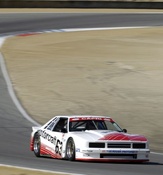

This might be more representative of what the '10 Stang will be in a sense, a styling refresh of an existing platform. And in the case of the '99 Stang, that Fox platform was an mind-numbing 20 years old at the time and would soldier on for yet another 5 years! At least the S-197 platform under the '10 will be far fresher and more performance oriented than that, even if the rear suspension is of a previous millennium.
Needs to be more Astony

Joined: October 4, 2004
Posts: 8,610
Likes: 5
From: Volo, IL
of course my post was strictly a joke of them reverting back to the sn95 chassis.
I've always said, if they would have taken the new edge stang and put the 3v 4.6 in it, the car would have been great straight line performance. Car would have been around 3150lbs, 300hp, and prob 19mpg city and 27hwy, prob do a very low 13 sec quarter and prob 12's with cai and tune.
Of course it wouldn't handle like the new car since it is on that old chassis. but still.
I've always said, if they would have taken the new edge stang and put the 3v 4.6 in it, the car would have been great straight line performance. Car would have been around 3150lbs, 300hp, and prob 19mpg city and 27hwy, prob do a very low 13 sec quarter and prob 12's with cai and tune.
Of course it wouldn't handle like the new car since it is on that old chassis. but still.
Cobra Member
Joined: May 16, 2006
Posts: 1,322
Likes: 0
From: NV
It's 1977 all over again.. time for a new improved FOX chassis 
Last edited by Vermillion06; May 16, 2008 at 09:19 AM.

Thread
Thread Starter
Forum
Replies
Last Post
mark0006
2015 - 2023 MUSTANG
15
Sep 8, 2023 09:46 AM
Diode Dynamics
Vendor Showcase
3
Jun 12, 2018 03:26 PM