


Can somebody explain this to me?


Thread Starter
Banned

Joined: September 6, 2012
Posts: 134
Likes: 0
From: Carol Stream, Il
Can somebody explain this to me?
Something I've always wondered. Why automakers do this:
Ford: Mercury Capri and Ford Mustang
.jpg/320px-'79-'82_Mercury_Capri_(Centropolis_Laval_'10).jpg)

GM: Chevy Cobalt and Pontiac G5


Chrysler: Dodge Challenger and Plymouth Barracuda


I could go on and on, but I figure you get the point. The company uses the same model for its own different branches and slaps a different name badge on them with some different body parts. What are they trying to accomplish?
Ford: Mercury Capri and Ford Mustang
GM: Chevy Cobalt and Pontiac G5
Chrysler: Dodge Challenger and Plymouth Barracuda
I could go on and on, but I figure you get the point. The company uses the same model for its own different branches and slaps a different name badge on them with some different body parts. What are they trying to accomplish?
Last edited by Casarez2125; Oct 18, 2012 at 12:02 PM.

TMS Post # 1,000,000
Serbian Steamer
Serbian Steamer
Joined: January 30, 2004
Posts: 12,636
Likes: 0
From: Wisconsin / Serbia
That's easy - name recognition.
It's much easier to sell a car with a higher price if it has a Mercury/Buick/Chrysler badge on it than Ford/Chevrolet/Dodge.
Volkswagen has been doing the same thing in Europe for a long time.
It's much easier to sell a car with a higher price if it has a Mercury/Buick/Chrysler badge on it than Ford/Chevrolet/Dodge.
Volkswagen has been doing the same thing in Europe for a long time.


TMS Post # 1,000,000
Serbian Steamer
Serbian Steamer
Joined: January 30, 2004
Posts: 12,636
Likes: 0
From: Wisconsin / Serbia
That changed in the late 1970s or early 1980s because the competition was stronger than ever before. In the 1990s, it was becoming unacceptable to sell even a "cheap" Chevy without a power windows or a/c. That drove prices higher so the difference between Chevy and Pontiac/Oldsmobile was much smaller than before. And that pretty much lead to discontinuing brands like Pontiac, Oldsmobile and Mercury (Buick would've been discontinued too, but it was a success for GM in China). There was no point of keeping them when you can get the same equipment on the cheaper brands like Chevy and Ford.
And Plymouth was killed because it was less popular than Dodge, which did cost more.

I lust for a M24
Joined: November 6, 2004
Posts: 7,042
Likes: 4
From: Football HOF, Canton OH
It's getting more cars onto the market while keeping costs down. If a customer has to decide between a Cobalt, a G5, and a Focus, then there's a 2/3rds chance that the money will go to GM. Modifying an existing car and selling it under a different nameplate is a lot cheaper than creating a new one.
TMS Post # 1,000,000
Serbian Steamer
Serbian Steamer
Joined: January 30, 2004
Posts: 12,636
Likes: 0
From: Wisconsin / Serbia
Not necessarily. Cobalt and G5 look exactly the same, so they're not a competition. If a customer decides that they don't like Cobalt for whatever reason - they're not gonna buy a G5 either. It doesn't really matter these days how many different versions of a same looking car there is.
I lust for a M24
Joined: November 6, 2004
Posts: 7,042
Likes: 4
From: Football HOF, Canton OH
Not necessarily. Cobalt and G5 look exactly the same, so they're not a competition. If a customer decides that they don't like Cobalt for whatever reason - they're not gonna buy a G5 either. It doesn't really matter these days how many different versions of a same looking car there is.
... Well, it is a Chevy.


Legacy TMS Member
Joined: May 16, 2004
Posts: 5,206
Likes: 18
From: Bristol, TN
+2 in alot of cases manufacturers will create a brand specific model to either appease dealers or increase volume.
Occasionally you will really get WTF! cars like the Pontiac G3 which was just a Chevy Aveo badged/styled as a Pontiac because Pontiac dealers felt they needed a small car to boost sales despite a definite lack of "excitement"
Definetely a case where GM shouldn't have placated the dealers which begs the question; Why did Pontiac need to be a full line division? IMO as GM's excitement division thier offerings should have been high end (relative to Chevrolet) performance cars.
Occasionally you will really get WTF! cars like the Pontiac G3 which was just a Chevy Aveo badged/styled as a Pontiac because Pontiac dealers felt they needed a small car to boost sales despite a definite lack of "excitement"
Definetely a case where GM shouldn't have placated the dealers which begs the question; Why did Pontiac need to be a full line division? IMO as GM's excitement division thier offerings should have been high end (relative to Chevrolet) performance cars.
Thread Starter
Banned
Joined: September 6, 2012
Posts: 134
Likes: 0
From: Carol Stream, Il
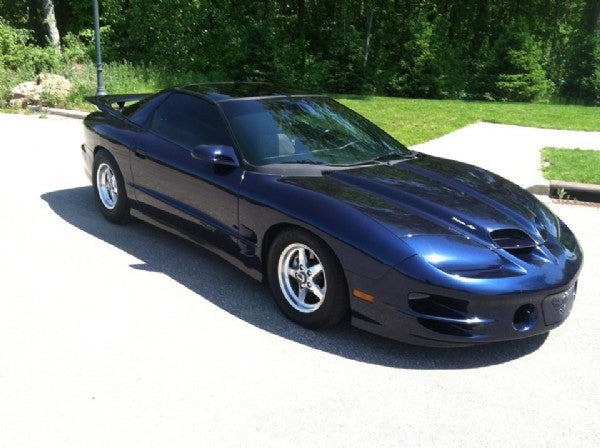
...and what were the differences between these two?
If there were a Trans Am in production today, it might look like this. Obviously, this is a Camaro's body with Firebird features.





Mach 1 Member
Joined: September 8, 2009
Posts: 544
Likes: 0
From: Brandon Florida
Actually in the TransAm and Camaro.. the different between them is the TransAm actually looked better. As for the 67 models, well, it was preference. But like Zoran said there were multiple models simply because of trim levels.

Legacy TMS Member
Joined: February 2, 2004
Posts: 7,648
Likes: 675
From: Insane
As a person who was seriously considering one of the TAs, quite a bit, actually, once you get past the main chassis/engine/drivetrain/brakes/wheels. There is about 0 shared between them otherwise. All panels are Firebird/TA only except the T-Tops, and even those I'm not terribly sure isn't Firebird/TA only.
The interior and exterior are highly superior (IMO, I'll grant) to the Camaro of the same vintage, as well as some of the packages for the car at the time. As such, if I had to choose between the two, the Ram Air WS6 package Trans Am would win hands down. Making a Camaro to the same specs would have been a couple thousand more at the time, by the way.
And THAT is why they make the two, if they have the market to do so. I wouldn't otherwise even *glance* at a GM car... except this one.
Only this one.
I still think they're the prettiest car GM made. Especially in Sunset Orange Metallic. Come to think of it, there's not many Trans Ams I've ever thought were ugly...
/I don't get in and out of that model (2000) very easily. I'm not tall. Those sills... that door... goodness.
//But once inside it? Ohhhh yeah.... I could be ok with it very easily.
///It's a toy though. Car is way impractical. Awesome can carry 6 bodies in the trunk and another 2 or 3 in the back. Plus a couple in the front seat if need be.
////Not that I've done that...
The interior and exterior are highly superior (IMO, I'll grant) to the Camaro of the same vintage, as well as some of the packages for the car at the time. As such, if I had to choose between the two, the Ram Air WS6 package Trans Am would win hands down. Making a Camaro to the same specs would have been a couple thousand more at the time, by the way.
And THAT is why they make the two, if they have the market to do so. I wouldn't otherwise even *glance* at a GM car... except this one.
Only this one.
I still think they're the prettiest car GM made. Especially in Sunset Orange Metallic.
Come to think of it, there's not many Trans Ams I've ever thought were ugly.../I don't get in and out of that model (2000) very easily. I'm not tall. Those sills... that door... goodness.
//But once inside it? Ohhhh yeah.... I could be ok with it very easily.
///It's a toy though. Car is way impractical. Awesome can carry 6 bodies in the trunk and another 2 or 3 in the back. Plus a couple in the front seat if need be.
////Not that I've done that...
Last edited by houtex; Oct 20, 2012 at 12:40 AM.
Cobra R Member
Joined: December 11, 2011
Posts: 1,839
Likes: 0
From: Mass
like it ever really stopped  .
.
Taurus / Sable
Contour / Mystique
Fusion / MKZ
Taurus / MKS
Edge / MKX
so and so on.
platform sharing, it has been going on for ages. once they figured out how costly it was for each car to have its own platform/parts. they upgraded the materials and design for each mark. some win some lose.
.Taurus / Sable
Contour / Mystique
Fusion / MKZ
Taurus / MKS
Edge / MKX
so and so on.
platform sharing, it has been going on for ages. once they figured out how costly it was for each car to have its own platform/parts. they upgraded the materials and design for each mark. some win some lose.
TMS Post # 1,000,000
Serbian Steamer
Serbian Steamer
Joined: January 30, 2004
Posts: 12,636
Likes: 0
From: Wisconsin / Serbia
Actually it wasn't until 1977 that the Camaro and Firebird became the exact same car. Although they have shared platforms before 1977, Firebird had Pontiac's engines (not Chevy; back then each GM's division had their own engines) and had a sportier suspension (John DeLorean's order).
Last edited by Zastava_101; Oct 20, 2012 at 06:23 AM.
Model differentiation while reducing development and production costs.
Platform sharing can be done well (VW) or badly (GM, Ford's extinct Mercury brand). The trick is building in enough real differention without going so far that the platform-sharing cost savings start to whither.
GM was notorious for doing it badly in a number of ways, from awkward stylistic differentiation to sharing too many compononents and elements that some models were nearly indistinguishable. Mercury, too, towards its end decayed into little more than slightly tarted-up Ford models, ostensibly a touch more luxurious in some fluff and glitz manner typical of Detroit, but basically just another Ford models a light scratch below the surface.
I guess its all a matter of who wins the development battle: the bean-counters/marketeers who want little more than enough surface differentiation with which to build some snazzy marketing campaign around while minimizing actual development costs; or the engineers, who do understand that two models do need to be truly different beyond just the surface, even if that means higher development costs.
It's an age-old and ongoing battle, one that is likely to continue as long as you have MBAs and engineering BSs under the same roof.
Platform sharing can be done well (VW) or badly (GM, Ford's extinct Mercury brand). The trick is building in enough real differention without going so far that the platform-sharing cost savings start to whither.
GM was notorious for doing it badly in a number of ways, from awkward stylistic differentiation to sharing too many compononents and elements that some models were nearly indistinguishable. Mercury, too, towards its end decayed into little more than slightly tarted-up Ford models, ostensibly a touch more luxurious in some fluff and glitz manner typical of Detroit, but basically just another Ford models a light scratch below the surface.
I guess its all a matter of who wins the development battle: the bean-counters/marketeers who want little more than enough surface differentiation with which to build some snazzy marketing campaign around while minimizing actual development costs; or the engineers, who do understand that two models do need to be truly different beyond just the surface, even if that means higher development costs.
It's an age-old and ongoing battle, one that is likely to continue as long as you have MBAs and engineering BSs under the same roof.
Shelby GT350 Member
Joined: February 5, 2008
Posts: 2,339
Likes: 3
From: Chattanooga
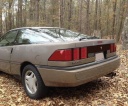
The roof and glass were identical on the 94-02 Camaros and Firebirds but none of the exterior body panels interchanged yet they still look the same. All this similarity was not such a big deal back in the day when large volumes of cars were being sold. However more is expected these days to differentiate cars that share platforms. There is nothing wrong with platform sharing if you have a great chassis to start with and it does not compromise the end products. However blatant rebadging and modest differentiation is a no-no these days. People are smarter these days so you cannot pass off a Ford as a Lincoln when you can get the same car as a Ford for less money without uneeded equipment.