


7 best American muscle cars of all time


Mach 1 Member

Joined: January 12, 2012
Posts: 1,070
Likes: 13
From: Suburbs of Dallas
Sure I said that when I referred to average power in a combination. Whether its a high torque engine using fewer gears or a high horsepower engine using more gears. The combination that produces the most average power will win the acceleration game.
Torque by itself is just force and doesn't do any work. In the case of an engine that force is combined with RPM to accomplish work (horsepower).
Torque by itself is just force and doesn't do any work. In the case of an engine that force is combined with RPM to accomplish work (horsepower).
Err, what?
Torque by itself is the force that does ALL of the work. Torque is the force applied to rotate an object around an axis. Without torque there are no RPMs. It's torque that moves your crankshaft.
Horsepower is just torque applied over time. Your RPM is just how many times the torque turned the engine in a minute. It's actually a post-work measurement. You produce no horsepower until after your torque has been applied for a set period of time.
Horsepower by itself is a meaningless statistic because it's only measured when the engine is just about at redline. Through the entire RPM range you ignore horsepower figures until the last 500 RMP or so that the engine has to give.
That is why your typical torque vs horsepower curves are so different. You only produce maximum horsepower near the maximum RPM, at low RPMs your horsepower is next to nothing. However, you produce fairly consistent torque across the entire RPM range. There is a rise and drop, but it's miniscule compared to the horsepower curve. It's the torque that pulls you through the RPM range and only when you hit the highest RPMs do you measure the horsepower.
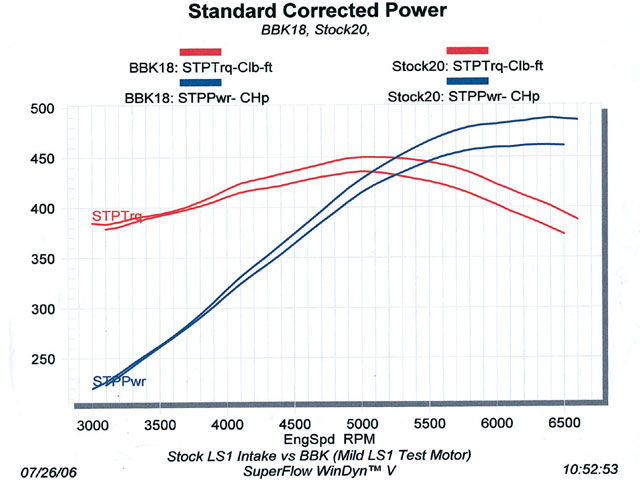
So, which wins the acceleration race?
Torque every time. Horsepower is NOT measured while accelerating.
Gearing is an entirely different issue as any engine can be geared to do almost anything you want, but gears do not increase horsepower or torque. Gears do no work on their own, they only change the rate at which the energy the engine produced is transferred to the rear end.
Last edited by Moustang; Dec 20, 2013 at 08:36 AM.

I might not actually include the Boss 429.
While obviously a big, powerful motor in a modestly sized body, the Stang is not a sedan strictly speaking and the 429 motor, while pretty strong off the showroom floor, really was not designed or intended for street/strip racing, which is another consideration for being a "Muscle Car," at least in my mind. The Mustang was more a platform of convenience for producing and selling the 429 mill in sufficient numbers to meet NASCAR homologation requirements, even if it took a lot of effort to fit that massive lump into the Stang.
The 429 motor was designed for ultimate, sustained peak power for NASCAR oval tracks and was readily outrun by the 428CJ in the Mach I at stoplights and on the strip. Indeed, it was relatively weak at the low end as a result of its high-end, peak HP focus. Of course, with some modest tuning it could readily trounce the 428 and most other motors in peak power way up the rpm range and was a stupendous motor in that context.
I would consider the Mach I with a 428CJ perhaps more the "Muscle Car" than the Boss 429.
While obviously a big, powerful motor in a modestly sized body, the Stang is not a sedan strictly speaking and the 429 motor, while pretty strong off the showroom floor, really was not designed or intended for street/strip racing, which is another consideration for being a "Muscle Car," at least in my mind. The Mustang was more a platform of convenience for producing and selling the 429 mill in sufficient numbers to meet NASCAR homologation requirements, even if it took a lot of effort to fit that massive lump into the Stang.
The 429 motor was designed for ultimate, sustained peak power for NASCAR oval tracks and was readily outrun by the 428CJ in the Mach I at stoplights and on the strip. Indeed, it was relatively weak at the low end as a result of its high-end, peak HP focus. Of course, with some modest tuning it could readily trounce the 428 and most other motors in peak power way up the rpm range and was a stupendous motor in that context.
I would consider the Mach I with a 428CJ perhaps more the "Muscle Car" than the Boss 429.
Err, what?
Torque by itself is the force that does ALL of the work. Torque is the force applied to rotate an object around an axis. Without torque there are no RPMs. It's torque that moves your crankshaft.
Horsepower is just torque applied over time. Your RPM is just how many times the torque turned the engine in a minute. It's actually a post-work measurement. You produce no horsepower until after your torque has been applied for a set period of time.
Horsepower by itself is a meaningless statistic because it's only measured when the engine is just about at redline. Through the entire RPM range you ignore horsepower figures until the last 500 RMP or so that the engine has to give.
That is why your typical torque vs horsepower curves are so different. You only produce maximum horsepower near the maximum RPM, at low RPMs your horsepower is next to nothing. However, you produce fairly consistent torque across the entire RPM range. There is a rise and drop, but it's miniscule compared to the horsepower curve. It's the torque that pulls you through the RPM range and only when you hit the highest RPMs do you measure the horsepower.
So, which wins the acceleration race?
Torque every time. Horsepower is NOT measured while accelerating.
Gearing is an entirely different issue as any engine can be geared to do almost anything you want, but gears do not increase horsepower or torque. Gears do no work on their own, they only change the rate at which the energy the engine produced is transferred to the rear end.
Torque by itself is the force that does ALL of the work. Torque is the force applied to rotate an object around an axis. Without torque there are no RPMs. It's torque that moves your crankshaft.
Horsepower is just torque applied over time. Your RPM is just how many times the torque turned the engine in a minute. It's actually a post-work measurement. You produce no horsepower until after your torque has been applied for a set period of time.
Horsepower by itself is a meaningless statistic because it's only measured when the engine is just about at redline. Through the entire RPM range you ignore horsepower figures until the last 500 RMP or so that the engine has to give.
That is why your typical torque vs horsepower curves are so different. You only produce maximum horsepower near the maximum RPM, at low RPMs your horsepower is next to nothing. However, you produce fairly consistent torque across the entire RPM range. There is a rise and drop, but it's miniscule compared to the horsepower curve. It's the torque that pulls you through the RPM range and only when you hit the highest RPMs do you measure the horsepower.
So, which wins the acceleration race?
Torque every time. Horsepower is NOT measured while accelerating.
Gearing is an entirely different issue as any engine can be geared to do almost anything you want, but gears do not increase horsepower or torque. Gears do no work on their own, they only change the rate at which the energy the engine produced is transferred to the rear end.
I could create 1,000 lb/ft of torque at the rear wheels with my bare hands given a long enough lever/gearing and all the time in the world, but that massive 1,000 lb/ft wouldn't accelerate even a bicycle down the quarter mile with much verve, much less a 2-ton car. For that, you need, ultimately, sufficient amount of energy being delivered at a sufficient rate to produce acceleration over a given time span. That is what HP measures, the actual amount of energy a motor is producing and that can accomplish acceleration of a mass over a given span of time and distance.
Legacy TMS Member
Joined: May 16, 2004
Posts: 5,206
Likes: 18
From: Bristol, TN
Well if you can find me a calculator that predicts 1/4 mile times based on torque alone, I'd like to see it?
You keep asserting that torque wins races which would mean a vehicle that reaches and maintains its peak torque value would be at max acceleration and after torque falls off it would slow down.
That's simply not the case, which you can measure using a 1/4 mile calculator by inputting the horsepower value at peak torque (easy enough its torque x rpm / 5252) and let it spit out the estimated time then input the peak horsepower value and let it spit out the estimated time.
The input with more horsepower ( irrespective of how much torque is available) will show a lower estimated time because it is capable of doing more work in the form of accelerating the vehicle.
and no, horsepower is not a post assessment - it can be measured at every RPM (as I've demonstrated above) point.

Legacy TMS Member
Joined: May 16, 2004
Posts: 5,206
Likes: 18
From: Bristol, TN
No when the car dead hooks and lifts the front wheels off the ground ( as a gross example ) that's torque, as soon as the car starts accelerating that's horsepower.
Once the car is in motion the more horsepower you can apply the faster it will accelerate ( you could express it in g-force but elapsed time is what we are used to ).
The notion that torque is what is at work is due to the limited number of gears and limited gearing available. Lots of torque means more average horsepower to work with that limited gearing which is less than ideal for acceleration.
If an engine can operate at peak horsepower from start to finish that will provide the most acceleration. A good example of this is a CVT equipped car. When they accelerate the transmission allows the engine to jump to peak power and holds it there until its done accelerating. Engine speed remains constant while the transmission allows the car to increase speed.
Incidentally that's why people complain about the operation of a CVT since we are used to an engine having to rev up and down as it goes through the limited number of gears.
Once the car is in motion the more horsepower you can apply the faster it will accelerate ( you could express it in g-force but elapsed time is what we are used to ).
The notion that torque is what is at work is due to the limited number of gears and limited gearing available. Lots of torque means more average horsepower to work with that limited gearing which is less than ideal for acceleration.
If an engine can operate at peak horsepower from start to finish that will provide the most acceleration. A good example of this is a CVT equipped car. When they accelerate the transmission allows the engine to jump to peak power and holds it there until its done accelerating. Engine speed remains constant while the transmission allows the car to increase speed.
Incidentally that's why people complain about the operation of a CVT since we are used to an engine having to rev up and down as it goes through the limited number of gears.

Thread
Thread Starter
Forum
Replies
Last Post
AMWill
Vendor Showcase
0
Jul 21, 2015 02:39 PM
AMWill
Vendor Showcase
12
Jul 20, 2015 08:40 AM
AMWill
Vendor Showcase
0
Jul 16, 2015 04:26 PM

