


Learning to drive a stick?


Bullitt Member

Joined: August 2, 2006
Posts: 355
Likes: 0
From: Central Jerseee

Team Mustang Source
Joined: January 5, 2005
Posts: 13,223
Likes: 14
I was 12 yrs old cleaning cars my reward got to drive and a 1965 Mustang if I stalled no driving for two months & I still had to clean, so it squeeled in every gear never stalled it ! Loved them ever since, for me it's a loota fun shifting and stuff.
Cobra R Member
Joined: May 8, 2006
Posts: 1,967
Likes: 0
From: Florida
I learned on a bunch of cars my friends had. I remember driving a Blazer first, then a BMW, a Celica, and a GTO. It was really frustrating for while for me. I stuck with it and ended up getting my car in a manual. I hope I never have to drive at auto again.
These cars are fairly easy to drive. It certainly isn't the easiest I have driven, but it's quite easy to learn on.
I came very close to purchasing an Acura RSX-S myself. I'm sure glad the car was off the lot when I went back to look at it. I love my car and am QUITE happy with her.
These cars are fairly easy to drive. It certainly isn't the easiest I have driven, but it's quite easy to learn on.
I came very close to purchasing an Acura RSX-S myself. I'm sure glad the car was off the lot when I went back to look at it. I love my car and am QUITE happy with her.
Legacy TMS Member
Joined: February 13, 2006
Posts: 2,523
Likes: 150
Two exercises that one of my friends taught me that really help:
1. Take your time in the parking lot to learn how to feel when the clutch is engaging and how to smoothly let it out and start rolling without touching the gas. You'll have to let the clutch out slowly so it doesn't stall, but afterward you should get a better idea of when it engages and how it behaves.
2. Stop the car on a hill (with no one behind you of course). With your foot still on the brake, slowly release the pedal until you hear the RPMs just start to drop like the clutch plate is just starting to contact the flywheel. slowly release the brake and try to hold the car on the incline just using the clutch pedal.
Both these lessons, if you will, exercise your ability to balance clutch and gas and control the amount of clutch slip which is essential.
Now when you're on the street, you don't have time to feel exactly when the clutch starts to engage the flywheel so don't forget to give it a little gas (not too much, maybe 1000-1200 RPM to start) or you'll stall it. Learned that the hard way. Take your time letting out the clutch at first and don't worry about wearing down the clutch lining while you're still learning. There's plenty of it when it's brand new. The clutch is a pain in the *** but the engine has a lot of torque so it's reasonably forgiving.
As far as what everyone was suggesting about learning about how it actually works, this site has some good info. It's a pretty basic overview but I'll do the job.
http://auto.howstuffworks.com/clutch.htm
Also helpful is this one they have on manual transmissions. The car in the video is a FWD honda, so the differential is built into the transmission (or transaxle) instead of located at the other end of a driveshaft.
http://auto.howstuffworks.com/transmission.htm
1. Take your time in the parking lot to learn how to feel when the clutch is engaging and how to smoothly let it out and start rolling without touching the gas. You'll have to let the clutch out slowly so it doesn't stall, but afterward you should get a better idea of when it engages and how it behaves.
2. Stop the car on a hill (with no one behind you of course). With your foot still on the brake, slowly release the pedal until you hear the RPMs just start to drop like the clutch plate is just starting to contact the flywheel. slowly release the brake and try to hold the car on the incline just using the clutch pedal.
Both these lessons, if you will, exercise your ability to balance clutch and gas and control the amount of clutch slip which is essential.
Now when you're on the street, you don't have time to feel exactly when the clutch starts to engage the flywheel so don't forget to give it a little gas (not too much, maybe 1000-1200 RPM to start) or you'll stall it. Learned that the hard way. Take your time letting out the clutch at first and don't worry about wearing down the clutch lining while you're still learning. There's plenty of it when it's brand new. The clutch is a pain in the *** but the engine has a lot of torque so it's reasonably forgiving.
As far as what everyone was suggesting about learning about how it actually works, this site has some good info. It's a pretty basic overview but I'll do the job.
http://auto.howstuffworks.com/clutch.htm
Also helpful is this one they have on manual transmissions. The car in the video is a FWD honda, so the differential is built into the transmission (or transaxle) instead of located at the other end of a driveshaft.
http://auto.howstuffworks.com/transmission.htm

V6 Member
Joined: May 2, 2007
Posts: 65
Likes: 0
I learned at 12 y/o to drive stick on Retired Army Deuce and a Half. Father had 4 of them on the farm, all converted with dump body's. Tough way to learn but nothing to hit out in the field's. By 14 was driving those truck's down the road. Legally of course because they had farm plate's.
GL. with patient's and practice you will get it.
GL. with patient's and practice you will get it.
GT Member
Joined: June 1, 2007
Posts: 106
Likes: 0
I've been driving stick since 1980.....learned on my husbands Plymouth Champ. It was sooooo easy to shift gears.
Some people like to downshift, I prefer to put it in neutral if I know I am going to stop.....say at a light or stop sign. If I'm slowing down for a turn I'll shift it in the gear for that speed.
I usually shift just before the RPMs reach 2000.
Just remember to keep it in gear when you park as well as the e-brake on. I usually keep mine in 1st gear since my driveway is on a slight incline. On my old GT, Ford recommended keeping it in Reverse when parked.
Some people like to downshift, I prefer to put it in neutral if I know I am going to stop.....say at a light or stop sign. If I'm slowing down for a turn I'll shift it in the gear for that speed.
I usually shift just before the RPMs reach 2000.
Just remember to keep it in gear when you park as well as the e-brake on. I usually keep mine in 1st gear since my driveway is on a slight incline. On my old GT, Ford recommended keeping it in Reverse when parked.
GT Member
Joined: October 11, 2004
Posts: 109
Likes: 0
I "kinda" knew how to drive a stick before I got my stang (practiced on a friend's car periodically), but had been out of practice for several years when it was time to pick it up. My pony is the first manual I have ever owned. So, I killed on my way off the dealer lot.  All that being said, its not tough to learn...it just takes practice. After a week or so, you'll be fine.
All that being said, its not tough to learn...it just takes practice. After a week or so, you'll be fine.
Cobra Member
Joined: November 10, 2005
Posts: 1,003
Likes: 0
I learned on my first car. It was a 72 Gran Torino with a 302 and an auto. I converted my car to a manual when I bought a wrecked 73 with a 351C Cobra Jet and a 4 speed. I dropped in the engine and tranny and had to learn to drive it after that. I haven't owned an Auto since then.
NTTAWWT
Joined: January 27, 2007
Posts: 14,456
Likes: 35
From: That town you drive through to get to Myrtle Beach
+1, did that in a Windstar one time, and hit the brake, the car stopped almost immediately. Personally, I wouldnt reccomend starting in something with 300hp, but see if you can find an older pickup style truck. Thats how I learned. Learning is really easy, you just have to be patient, go to a neighborhood, or parking lot with no traffic. And just practice starting and stopping. All you really have to remember is, give it just enough gas to hear the engine more than idle, and slowly let out of the clutch. After a few times of that, you'll be able to feel the clutch engage and disengage and will get better with it.


Member
Joined: August 1, 2006
Posts: 20
Likes: 0
Two exercises that one of my friends taught me that really help:
1. Take your time in the parking lot to learn how to feel when the clutch is engaging and how to smoothly let it out and start rolling without touching the gas. You'll have to let the clutch out slowly so it doesn't stall, but afterward you should get a better idea of when it engages and how it behaves.
2. Stop the car on a hill (with no one behind you of course). With your foot still on the brake, slowly release the pedal until you hear the RPMs just start to drop like the clutch plate is just starting to contact the flywheel. slowly release the brake and try to hold the car on the incline just using the clutch pedal.
Both these lessons, if you will, exercise your ability to balance clutch and gas and control the amount of clutch slip which is essential.
Now when you're on the street, you don't have time to feel exactly when the clutch starts to engage the flywheel so don't forget to give it a little gas (not too much, maybe 1000-1200 RPM to start) or you'll stall it. Learned that the hard way. Take your time letting out the clutch at first and don't worry about wearing down the clutch lining while you're still learning. There's plenty of it when it's brand new. The clutch is a pain in the *** but the engine has a lot of torque so it's reasonably forgiving.
1. Take your time in the parking lot to learn how to feel when the clutch is engaging and how to smoothly let it out and start rolling without touching the gas. You'll have to let the clutch out slowly so it doesn't stall, but afterward you should get a better idea of when it engages and how it behaves.
2. Stop the car on a hill (with no one behind you of course). With your foot still on the brake, slowly release the pedal until you hear the RPMs just start to drop like the clutch plate is just starting to contact the flywheel. slowly release the brake and try to hold the car on the incline just using the clutch pedal.
Both these lessons, if you will, exercise your ability to balance clutch and gas and control the amount of clutch slip which is essential.
Now when you're on the street, you don't have time to feel exactly when the clutch starts to engage the flywheel so don't forget to give it a little gas (not too much, maybe 1000-1200 RPM to start) or you'll stall it. Learned that the hard way. Take your time letting out the clutch at first and don't worry about wearing down the clutch lining while you're still learning. There's plenty of it when it's brand new. The clutch is a pain in the *** but the engine has a lot of torque so it's reasonably forgiving.
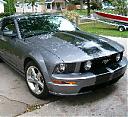
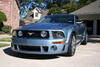
She learned on my 2002 GTI 1.8T and loves manual over auto
She drives my mustang like a pro

She doesn't drink so it's great to have a designated driver that can drive my car without damaging it.

V6 Member
Joined: March 16, 2007
Posts: 69
Likes: 0
Great stories, enjoy hearing how everyone learned. I agree, get the car and learn and enjoy. Me, I learned (a long time ago) on a friend's 65 VW Beetle. Have had almost all manual transmissions since, still preferring them even though I deal with Houston traffic.
Learning to drive a manual transmission was a required learning for my daughter. Even though her car(s) are automatics, she has put this skill to use a few times when a someone needed a car driven/moved and she was the only one around who could drive a stick. If I remember, once it gained her some respect around a bunch of guys..... Also, it's a skill that once you master, you never lose.
Learning to drive a manual transmission was a required learning for my daughter. Even though her car(s) are automatics, she has put this skill to use a few times when a someone needed a car driven/moved and she was the only one around who could drive a stick. If I remember, once it gained her some respect around a bunch of guys..... Also, it's a skill that once you master, you never lose.

Member
Joined: July 22, 2007
Posts: 17
Likes: 0
I've tought many people how to drive a manual transmission. First thing I do is to explain just what a clutch is, what it does, why it is there. I tell them like this. (I also let them know that the pedal on the floor is not the clutch, but is the clutch pedal that connects directly to the clutch).
"A clutch is nothing more than a device that connects the engine to the rest of the car". When at a stop, the engine is not connected to the rest of the car. When you want to start moving (in first [low] gear) , you must engage the clutch (connect the engine to the rest of the car) slowly. When you are moving and the car is going too slow for the engine rpm, you must then disconnect the clutch (disconnect the engine from the rest of the car), shift to the next higher gear (second), then re-engage the clutch (re-connect the engine to the rest of the car). Once they understand the function of the clutch, the rest is easy.
Next hardest thing for them to learn is which gear to be in when you go around a corner, but thats another story.
"A clutch is nothing more than a device that connects the engine to the rest of the car". When at a stop, the engine is not connected to the rest of the car. When you want to start moving (in first [low] gear) , you must engage the clutch (connect the engine to the rest of the car) slowly. When you are moving and the car is going too slow for the engine rpm, you must then disconnect the clutch (disconnect the engine from the rest of the car), shift to the next higher gear (second), then re-engage the clutch (re-connect the engine to the rest of the car). Once they understand the function of the clutch, the rest is easy.
Next hardest thing for them to learn is which gear to be in when you go around a corner, but thats another story.